If you’ve ever worked in oil & gas, petrochemicals, or even heavy machinery, you’ve probably used forged fittings—those tiny but critical parts that hold pipes, valves, and equipment together, right? Let’s be real: cheap, flimsy fittings snap under pressure and cause total chaos, which is why I only stand behind forged ones. As someone who’s supplied these parts for years, I get that most folks in the industry don’t geek out over the behind-the-scenes of how they’re made. But knowing the common forging methods can actually help you pick the best fittings for your job (and avoid headaches down the line). No fancy jargon, just real talk about what works and why. Forged Fittings
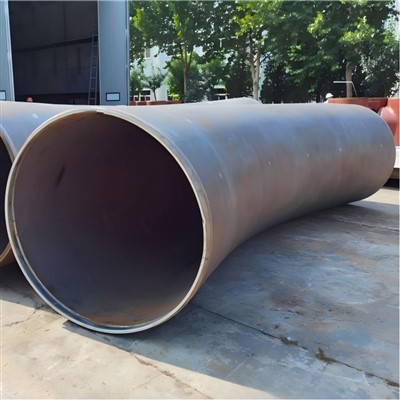
First, let’s cut through the confusion: forging is basically shaping metal by hammering or pressing it when it’s super hot (or sometimes cold), which makes the material stronger than casting or machining alone. That’s why forged fittings are non-negotiable for high-stakes environments—they don’t crack under pressure, vibration, or extreme temps. Now, let’s dive into the methods we actually use in our shop, since that’s what matters most.
1. Open Die Forging: For Custom, No Fuss Jobs
If you need a one-off fitting that’s not a standard size, open die forging is the way to go. Here’s how it works: you take a big block of metal (say, carbon steel, stainless steel, or even alloy steel) and heat it to a glowing orange heat—like, hot enough to soften it but not so much that it turns to liquid. Then you use two flat or shaped dies (think of them as heavy metal molds) to hammer the metal into whatever shape you need, bit by bit. It’s a slow process—no mass production here—but it’s perfect for custom orders.
We use this method all the time when a customer comes to us with a weird, specific fitting for a unique project. Last year, a pipeline engineer hit us up needing a 6-inch forged elbow for a remote well site that no standard supplier carried. We tossed a block of carbon steel into the furnace, hammered it into shape over a few shifts, and ended up with a fitting that held up through -20°F winters and 1,500 PSI pressure without a single issue. The downside? It’s not cheap, and it’s not fast if you need a dozen of the same part. But for non-standard, mission-critical pieces? It’s unbeatable.
2. Closed Die Forging: The Go-To for Standard Forged Fittings
This is the workhorse of our shop—closed die forging, and it’s what makes 90% of the standard fittings you buy from suppliers. The process uses two custom-made, shaped dies that clamp down on a heated metal blank, forcing the metal to fill every nook and cranny of the die cavity. It’s way faster than open die, and you can crank out hundreds of identical parts in a single run.
Here’s why we love it: it’s super precise, which means every elbow, tee, or coupling you get from us has consistent dimensions, no uneven spots, and way less waste than other methods. The grain structure of the metal gets stretched and aligned perfectly during the forging process, so the fitting is way stronger than a machined part cut from a solid bar. We use this for all our standard 2-inch, 3-inch, and 4-inch tees, couplings, and crosses—they’re the workhorses for refineries and water treatment plants that need bulk, reliable parts. The only catch? You have to make a new die for every new part design, so it’s not worth it for tiny, one-off orders. That’s where open die comes in, like I said earlier.
3. Hot Upset Forging: Ideal for Fittings with Thick Ends
Wait, have you ever seen a forged fitting where the end is way thicker than the main body? Like, a forged nipple or a threaded coupling? That’s usually made with hot upset forging, and it’s a game-changer for those parts that need extra strength where they connect to pipes. Here’s how it works: you take a straight metal rod, heat one end super hot, then clamp the cool part and hammer the heated end until it bulges out into the shape you need. No waste, and you don’t have to machine a bunch of extra metal away later.
We use hot upset forging for all our threaded fittings because the thick end means the threads won’t strip when you tighten them to a pipe. I’ve had customers tell us they used cheaper fittings from a competitor where the thread end snapped off after a few months of use—total nightmare. Our hot upset parts? They’re designed to handle the torque from tightening, so you don’t have to worry about that. It’s also way more efficient than machining a thick end onto a rod, which would waste half the metal and take twice as long.
4. Cold Forging: For Small, High-Precision Fittings (When Heat Isn’t Allowed)
Okay, not all forging is done with super hot metal. Cold forging is exactly what it sounds like—shaping metal at room temperature, or close to it. We only use this for small, delicate fittings, like those used in hydraulic systems or instrumentation lines, where you need super tight tolerances. The big upside here is that you get way more precise parts, and the cold working actually makes the metal stronger too.
But wait, there’s a catch: you can’t use cold forging for thick or hard metals, like high-alloy steels—they’re too brittle and would crack if you hammered them at room temp. It’s also slower for large parts, so we stick to small fittings here. A customer last year needed 1,000 small forged adapters for a lab testing rig—tiny, precise, with threads that had to be within a thousandth of an inch of spec. Cold forging was the only way to get that level of accuracy without having to machine each part individually. It cost a bit more than standard hot forged adapters, but they worked perfectly for his setup.
5. Press Forging: For Large, Heavy-Duty Fittings
When we need something massive—like a 12-inch forged flange for a power plant or a big elbow for a pipeline—we use press forging. Instead of hammering the metal with repeated blows (like in open or closed die forging), press forging uses a huge hydraulic press that applies steady, constant pressure to shape the metal. It’s slower than closed die, way faster than open die for really big parts.
The benefit here is consistent strength across the entire part, no weak spots from uneven hammering. We use press forging for all our extra-large fittings that go into heavy industry. Last year, a power plant contractor ordered a set of 10-inch forged tees for their new coal processing line—those things are solid, weigh over 200 pounds each, and have to handle high heat and corrosive chemicals. Press forging gave them the uniform grain structure they needed to last 20+ years, which is exactly what the plant required. The only downside is that you need big, expensive equipment for press forging, which is why not all suppliers offer it.
Now, I know what a lot of you are thinking: “Why does this matter to me?” Let’s be real—most buyers just look for the right size and material, but picking the wrong forging method can lead to part failure, downtime, and lost money. If you need a standard bulk fitting, closed die is the way to go. If you need a custom part for a unique project, open die. If it’s a small, precision part, cold forging, and big heavy parts? Press forging. Hot upset is perfect for threaded parts, which is like 80% of the fittings we sell.
And before you ask—we don’t cut corners here. We test every single batch of forged fittings we sell, checking for strength, dimensions, and no hidden defects. The last thing we want is a customer calling us at 2 a.m. because a fitting snapped and shut down their operation. That’s why we only use these proven forging methods, no cheap shortcuts.
If you’re shopping around for forged fittings, you know there are a ton of suppliers out there, but not all of them are honest about their forging methods. Some will use inferior casting and call it forging, or machine parts that should be forged. Don’t fall for that. At the end of the day, the forging method directly impacts how strong, reliable, and long-lasting your fitting is.

Ready to stop dealing with flimsy, unreliable fittings that cause headaches? Hit us up to talk through your project—we’ll help you pick the right forging method, the right size, and the right material for your needs, no pushy sales talk, just straight answers. Whether you need 10 custom parts or 1,000 standard tees, we’ve got you covered.
ASME Flange References
- Forging Industry Association. (2022). Forging Fundamentals: Methods and Applications for Industrial Components.
- ASME B16.11. (2021). Forged Fittings, Socket-Welding and Threaded. American Society of Mechanical Engineers.
- Campbell, J. (2012). Metal Forging: Processes, Materials, and Design. Industrial Press.
- NACE International. (2020). Corrosion-Resistant Forged Fittings for Oil and Gas Production.
Hebei Haihao Group Huadian High Pressure Pipe Fittings Co., Ltd.
As one of the most professional forged fittings manufacturers and suppliers in China, we are able to meet the needs of the majority of our customers. Please rest assured to wholesale high quality forged fittings made in China here from our factory. For price consultation, contact us.
Address: Donglin Industrial Zone, Mengcun County, Cangzhou City, Hebei Province, China
E-mail: haihaohuadian@outlook.com
WebSite: https://www.hhfittings.com/
