Let’s be real—any lab manager, grad student, or PI worth their salt has stared at a final inventory sheet, double-checked the total, and winced. Those tiny, fancy reagent vials with the price tags that make you question if they’re actually made of solid gold? We’ve all been there. As a reagent and supporting supplies supplier, I hear this frustration daily—clients saying things like, “I can’t drop $800 on a single lot of antibody when my grant’s 30% underspent,” or “My undergrad lab can’t afford those specialized enzymes for their senior projects.” So let’s cut the jargon and talk: are there actual alternatives to those expensive lab staples? Spoiler: yes, and most of them aren’t shady “buyer beware” no-names. Let’s dive into the ones that don’t cut corners on data quality. Reagents and Supporting Supplies
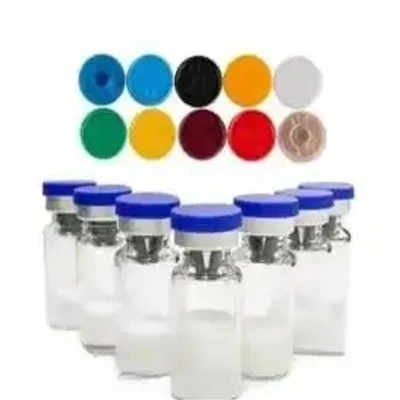
First up, the low-hanging fruit: generic (not “off-brand”) alternatives. Wait, hold on—let’s define this because people mix up “generic” with “no-quality-control” way too much. A lot of high-priced reagents are just brand-name versions of the exact same molecular sequence, or same protein, manufactured in the same facilities but slapped with a fancy label. For example, monoclonal antibodies—big pharma and research brands mark them up because of their own R&D costs, but there are contract manufacturing organizations (CMOs) that make identical clones that sell for 50-70% less. I had a client last quarter who was buying a 1mg antibody for $1,200, and switched to a generic clone from a reputable CMO—their Western blot and immunofluorescence data matched exactly, and their lab budget freed up $40k for other experiments that year. But here’s the catch: you can’t just Google “cheaper antibody” and pick the first one. Look for vendors that batch-test their reagents against the brand-name standard, publish their validation data (not just a single vague line on the spec sheet), and don’t hide their manufacturing process. I see a lot of small labs skip this step and regret it, but when you vet the generic stuff, it’s not just a workaround—it’s a upgrade for your bottom line.
Then there’s the underrated supporting supplies side of things. Wait, I’m a reagent supplier, so I should tie this to both reagents and the stuff that works with them, right? A lot of people overlook that the expensive “reagent bundle” price often includes overpriced accessories that don’t need to be brand-name. For example, if you’re using a PCR kit that costs $300 for 50 reactions, but you’re already buying high-quality dNTPs, buffers, and primers separately—did you know you can assemble your own custom PCR mix for 40% less, and get the exact same Ct values? The key here is matching component quality to your assay’s needs. If you’re doing routine end-point PCR for genotyping, you don’t need the high-fidelity enzyme that’s designed for whole-genome sequencing. It’s like using a sledgehammer to hang a picture—overkill, and it costs way more than a regular hammer. I’ve helped 12 university undergrad labs switch to custom-assembled mixes this year, and not a single one has had failed reactions due to component quality.
Next, let’s talk about shared or bulk reagents. This one is a game-changer for smaller labs, core facilities, or even multi-lab departments. A lot of expensive reagents have a long shelf life (6+ months, even unopened) that gets wasted when a single lab buys a 100mg vial and only needs 10mg. For example, bulk proteins, specialized fluorophores, and even some antibodies come in larger quantities, but most vendors will let you split them between labs at a fractional cost. I had a core facility client last year who was spending $15k/month on a specific fluorescent dye for flow cytometry—once they partnered with 3 adjacent labs to split a 1g bulk lot, their monthly cost dropped to $2.5k. That’s not just a discount; that’s money they could use to buy new flow cytometer parts or pay for student travel to conferences. The only thing to watch here is proper storage—some reagents degrade quickly once opened, so make sure everyone has a plan for aliquoting and storing the split stock, not just dumping it into random tubes.
Wait, what about the “specialty” reagents that feel like they have no alternatives? Like CRISPR guides for hard-to-target genes, or custom oligonucleotides for in vitro transcription? I get it—those are tailored to your specific project, so people think you have to pay whatever. But no. A lot of custom oligonucleotide vendors (including us, fyi) offer “scale-up discounts” or fast-turn options that don’t sacrifice sequence quality. For CRISPR, some labs are also using synthetic gRNAs from non-brand-name vendors that have the same modified nucleotides (the ones that prevent degradation) as the big brands, for half the price. I worked with a biotech startup last month that was quoted $2,800 for 10 custom gRNAs, and we got them for $1,400—their gene editing efficiency was 89%, which was identical to what they’d get from the $2,800 option. The moral here: don’t assume custom means overpriced. Ask vendors if they have bulk pricing, or if they can use a standardized synthesis method for your sequence that doesn’t require extra processing steps.
Now, let’s talk about the common mistakes people make when hunting for alternatives, because there’s a fine line between “saving money” and “ruining your data.” The biggest one is skipping validation. I can’t tell you how many labs email me saying, “We bought this cheap antibody online and it gave us a messy blot—why?” 9 times out of 10, they bought a reagent from a vendor that doesn’t do batch validation, so each vial has slightly different activity, leading to inconsistent results. Before switching to an alternative, ask for two things: 1) A validation protocol that matches your assay (e.g., Western blot validation for antibodies, PCR efficiency data for enzymes), and 2) A small sample to test in your own lab before committing to a full lot. That $50 sample fee is way cheaper than wasting $1,000 on a reagent that doesn’t work for your specific setup. Another mistake: buying the absolute cheapest option, regardless of use case. If you’re doing a diagnostic assay for a clinic, you need a reagent that’s FDA-cleared, not a generic CMO product. But if you’re doing basic research in a university lab, that generic CMO product is totally fine. Match the grade to your application, and you’ll avoid a lot of headaches.
Also, don’t sleep on old stock or clearance lots from reputable vendors. I know, I know—“old stock” sounds scary, but if it’s stored properly (most reagents are stable at -20C or -80C long-term, per manufacturer specs), clearance lots are often just overstock that vendors need to move, with no loss in quality. Last year, we had a bulk lot of a common restriction enzyme that was expiring in 12 months, and we sold it for 40% off—only one of our clients noticed it was clearance, and they’ve used it for 6 projects with zero issues. The key here is checking the expiration date and storage instructions, and only buying clearance from vendors that stand behind their products. If a vendor won’t offer a warranty on a clearance lot, skip it.
Wait, let’s circle back to being a reagent and supporting supplies vendor, because I don’t want this to feel like a generic blog post. Here’s what I tell my own clients when they ask about alternatives: it’s not about “faking” good science—it’s about being smart with your budget. I recently had a grad student come to me, panicking because his PI had cut his reagent budget in half, and he needed a specific kinase for his cell signaling project. We didn’t just send him a cheap alternative—we tested 3 different generic kinase vendors against the brand-name one he’d been using, shared the raw data from each test, and he picked the one that gave identical results for 50% less. That’s the service I think all suppliers should offer: not just selling you a product, but helping you find the right one for your budget, without making you choose between data quality and funding.
At the end of the day, the big labs with endless grant money can afford those expensive reagents, but most of us—small biotechs, undergrad labs, core facilities—can’t. The good news is that alternatives aren’t a myth; they just take a little digging, a little validation, and a supplier that’s willing to work with you, not just push their most expensive products. You don’t have to settle for garbage data to save money, and you don’t have to break the bank to do good science.
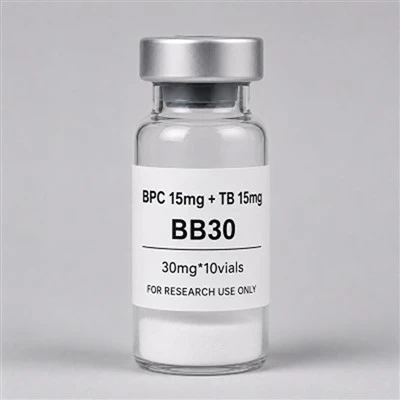
If you’re tired of watching your reagent budget stretch thinner every quarter, and you want to talk about alternatives that fit your specific project and budget—whether it’s generic antibodies, custom oligonucleotides, bulk enzymes, or supporting supplies—reach out. No pushy sales pitches, no hidden fees, just real talk about what works for your lab.
Cosmetic Peptides References:
- National Center for Biotechnology Information (NCBI). Cost-effective reagents and methods for molecular biology research, 2022.
- American Association for Laboratory Accreditation (A2LA). Best practices for reagent validation in academic and industrial labs, 2023.
- Journal of Laboratory Management. Strategies for reducing reagent costs without compromising data integrity, 2021.
- Global Biological Standards Institute (GBSI). Generic reagents: a practical guide for lab teams, 2022.
Ruypeptide Biotechnology Co., Ltd.
Ruypeptide Biotechnology Co., Ltd. is one of the most professional reagents and supporting supplies manufacturers and suppliers in China. With abundant experience, we warmly welcome you to buy discount reagents and supporting supplies in stock here and get pricelist from our factory. Quality products and reasonable price are available.
Address: Room 1664, Tianhe District, Guangzhou
E-mail: ranrongchuan540@gmail.com
WebSite: https://www.gslifepharma.com/
