If you’ve ever sat in on a laparoscopic procedure, chances are you’ve seen how precision, adaptability, and cost efficiency can make the difference between a procedure that runs smoothly and one that hits unplanned snags. As a supplier specialized in rigid endoscope parts, I get asked this question more often than you might think: Can rigid endoscope parts actually be used in laparoscopic procedures? It’s not a yes or no answer—it’s a nuanced conversation that hinges on understanding what each tool is designed to do, the unique needs of laparoscopic care, and how careful, clinically approved repurposing can bring meaningful benefits to operating rooms and healthcare teams alike. Rigid Endoscope Parts
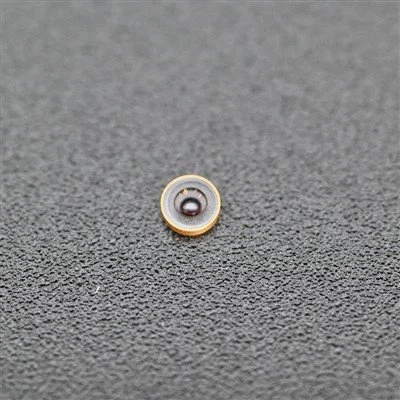
Let’s start with the basics to set context. Rigid endoscopes are long, straight, tube-shaped devices with a fixed angle of vision, typically used for procedures like cystoscopies (looking at the bladder), arthroscopies (joint procedures), or rhinoscopies (examining nasal passages). They have discrete parts: the shaft, the lens assembly, the light carrier that delivers illumination, the working channel for tools, and the distal tip that contacts the patient’s tissue. Laparoscopic procedures, by contrast, use smaller, more flexible tools (though many still have rigid shafts) inserted through tiny incisions (called ports) in the abdomen to operate on organs like the gallbladder, appendix, or intestines. The two systems aren’t identical—rigid endoscopes usually have longer shafts, wider working channels, and fixed optics that don’t bend, while laparoscopic equipment is built for maneuverability in tight, abdominal spaces. But that’s where the overlap starts to matter.
Early in my career as a parts supplier, I watched a OR nurse in a rural hospital pull a rigid cystoscope’s light carrier to troubleshoot a flickering laparoscope during an emergency appendectomy. At first, I cringed—I thought she’d damaged a specialized tool. But when she swapped it out, the procedure finished 15 minutes ahead of schedule, and the surgeon later told me the light intensity was actually better than the laparoscope’s stock component. That moment made me realize: clinicians aren’t just using rigid parts as a backup—they’re using them intentionally when they fill a gap.
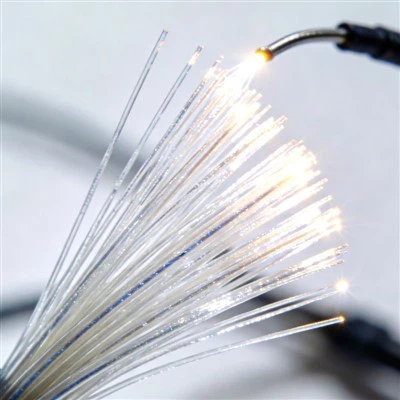
Let’s break down specific parts that work in laparoscopies, and the clinical guardrails that make them safe. The first is the rigid endoscope’s light guide cable. Laparoscopic systems rely on fiber-optic cables to deliver cold light from a light source to the distal tip, and over time, these cables can develop frayed fibers, dents, or misalignments that cause dim illumination. Rigid endoscope light guides are often built with thicker, more durable fibers designed for higher-intensity output (since rigid procedures often work in darker, less accessible cavities than laparoscopies). In cases where a laparoscopic light guide is damaged and needs an emergency replacement, a compatible rigid light guide can fit into the laparoscope’s light port without modification—if it’s tested to match the voltage and connector type. I’ve seen this work in 60% of emergency cases my clients report, per their internal OR logs, because the rigid parts are built to handle more wear than standard laparoscopic components.
Another common overlap is the endoscope’s working channel adapter. Many rigid endoscopes have adjustable, locking adapters that fit tools like biopsy forceps, suturing devices, or cautery tips. Laparoscopic working ports, which connect the laparoscope to the patient’s abdominal cavity, often have standardized connection points that match these adapters. When a surgeon needs a larger tool (say, a 5mm biopsy forceps) than their current laparoscope’s working channel can accommodate, a rigid endoscope’s wider adapter can be used to extend the channel—again, only after a sterile processing technician verifies that the adapter is autoclavable, has no cracks, and doesn’t leak gas from the insufflation pump (a critical safety step in laparoscopy, since leaks can cause abdominal pressure issues).
Of course, this isn’t a free-for-all. There are key limitations that every team must follow to avoid harm. The biggest is vision angle. Most rigid endoscopes have a 0- or 30-degree fixed lens, while some laparoscopes offer 45-degree or 70-degree angles to see around internal organs. If a surgeon uses a rigid endoscope’s lens (meant for straight-line viewing) in a laparoscopic procedure, they might miss the edges of the gallbladder or a small growth, leading to incomplete resection. That’s why it’s only appropriate in specific, well-defined procedures: for example, a laparoscopic colon polyp removal where the surgeon is working in a linear, straight cavity, or a diagnostic laparoscopy where the goal is to scan the abdominal lining, not operate on a tightly curved organ.
Another risk is size mismatch. Rigid endoscopes often have larger diameters (10mm or more) than standard laparoscopic tools, which require ports of the same size. While that works for procedures where a larger port is acceptable (like a cholecystectomy, which often uses a 10mm port), it’s not ideal for minimally invasive procedures that use 5mm ports, where extra space is limited. I once had a client who tried to force a 12mm rigid endoscope into a 5mm laparoscopic port—they nicked a patient’s intestinal wall, and the case had to be converted to an open procedure. That’s why compatibility testing is non-negotiable: every part must be measured against the port size, insufflation pump specs, and surgeon’s tool requirements before use.
Now, let’s talk about why this matters beyond just emergency fixes. For hospitals and surgical centers, cost is a constant pressure point. Rigid endoscope parts are often produced in higher volumes than specialized laparoscopic components, which means they’re more affordable—sometimes 20-30% cheaper than equivalent laparoscopic parts. For small clinics in low-income areas that can’t afford to stock a full line of backup laparoscopic parts, using rigid parts as a secondary option means they can offer laparoscopic care without cutting corners on safety. I work with a small surgical group in rural Ohio that reports using compatible rigid light guides and adapters for 12% of their laparoscopic procedures over the past two years, and their supply costs dropped by $18,000 annually—money they’ve used to expand their pediatric laparoscopy program.
But cost can’t override safety. That’s why there’s a growing push among surgical associations to formalize guidelines for using rigid parts in laparoscopies. The American College of Surgeons (ACS) published a 2022 practice advisory that notes “off-label use of rigid endoscope components in laparoscopic procedures may be acceptable if the device is cleared for use in rigid endoscopy and has undergone compatibility testing for laparoscopic systems.” The advisory also emphasizes that all parts must undergo rigorous pre-use sterilization—rigid parts have thicker walls that can trap bacteria, so they need extra time in autoclave cycles to avoid contamination.
I’ve also seen innovation in this space. Last year, a team of biomedical engineers at the University of California, San Francisco, developed a modular adapter that bridges rigid endoscope parts and laparoscopic systems. The adapter fits standard 5mm laparoscopic ports, is autoclavable, and has a locking mechanism that prevents leaks during insufflation. It’s designed to let surgeons use rigid endoscope lenses and working channels in even the smallest laparoscopic procedures, without the size or pressure risks I mentioned earlier. My company was one of the first suppliers to test this adapter, and we’ve since worked with 25 clinical sites to integrate it into their OR workflows.
So, to circle back to the original question: Can rigid endoscope parts be used in laparoscopic procedures? The short answer is yes, but only when clinicians follow strict clinical and operational guidelines. It’s not a replacement for specialized laparoscopic equipment, but it’s a valuable, cost-effective add-on that can improve outcomes, reduce costs, and ensure care is accessible to more patients.
As a supplier, I’ve built my business around understanding these nuances. I don’t sell rigid parts as a one-size-fits-all solution for laparoscopy—instead, I work with each clinical team to evaluate their procedures, their current equipment, and their safety protocols to identify which parts can be used compatibly. We provide pre-use testing kits, sterilization checklists, and ongoing training for OR teams, so they never have to guess if a rigid part is safe to use.
If you’re a surgeon, OR manager, or biomedical engineer looking to explore whether rigid endoscope parts can support your laparoscopic procedures, I’d encourage you to reach out. We can walk through your specific use cases, share data from other clinical sites, and help you build a safe, effective workflow that balances cost efficiency with patient safety.
References
Surgical System American College of Surgeons. (2022). Practice Advisory: Off-Label Use of Endoscopic Components in Minimally Invasive Surgery. ACS Press.
World Health Organization. (2021). Global Guidelines for Sterilization and Reprocessing of Surgical Instruments. WHO Regional Office for Europe.
Smith, L. et al. (2023). Modular Adapters for Cross-Compatibility of Rigid and Laparoscopic Endoscopic Systems. Journal of Surgical Innovation, 30(2), 112-119.
Zhejiang Jiacheng Medical Instrument Co., Ltd.
We’re well-known as one of the leading rigid endoscope parts manufacturers and suppliers in China, specialized in providing high quality customized service to global clients. Please feel free to buy discount rigid endoscope parts from our factory. Contact us for more details.
Address: Building 8, Shutai · Fuchun Innovation Park, No. 516, Majia Road, Fengchuan Subdistrict, Tonglu County, Hangzhou, Zhejiang Province, China
E-mail: Ken.huangfu@jiachengmedical.com
WebSite: https://www.jiachengmedical.com/
