If you’ve ever stood in front of a dusty old tractor or a brand-new one, wondering why it won’t turn over when you turn the key, you’re not alone. As someone who’s been supplying tractors to farms, landscaping companies, and even small hobby farms for over a decade, I get asked this question all the time: “How do you start a tractor?” It’s not just a random, one-size-fits-all step—there are a few key checks, and a few common mistakes that trip people up every single time. Let’s break this down like I’d explain it to a new customer who just picked up their first tractor from our lot, no stuffy jargon, just real, actionable stuff that works. Tractors

First off, let’s get one thing straight: starting a tractor isn’t like starting a car. Cars are built for city streets, short trips, and quick ignition. Tractors? They’re heavy-duty workhorses, designed to pull plows, mow 10 acres, or haul firewood, so their start-up process is built for reliability, not speed. Skip a step, and you’ll either get a dead click, a sputter that dies immediately, or worse, damage to the starter motor. I’ve seen it happen more times than I can count—customers rush the process, forget to engage safety switches, and then they’re stuck waiting for a tow or a mechanic. Don’t be that guy.
Let’s start with the pre-start checks, because this is where 80% of start issues come from. You wouldn’t fire up a truck without checking the gas, right? Same rule applies here. First, pop the hood (or the side panel, depending on your model) and do a quick walkaround. Wait, no—even before that, check the basics: fuel level. It sounds obvious, but I’ve had customers bring tractors back to the shop saying “it won’t start” just to find the gas gauge was on empty. Tractors, especially older models, hate running on fumes—condensation builds up in the tank, which clogs the fuel filter and makes starting impossible. A quick visual: if the fuel tank looks like it’s got less than a quarter tank, top it off. Use the right fuel, too. Most small tractors run on regular unleaded, but diesel tractors? Don’t put gas in them. That’s a fast way to ruin the engine. Pro tip: keep a spare gallon of the right fuel in your toolbox for emergencies, just in case.
Next, check the engine oil and coolant. Again, seems basic, but low oil can seize the engine before you even turn the key, and overheating from low coolant will kill a start too. Most modern tractors have dipsticks just like cars—pull it out, wipe it clean, stick it back in, pull it out again. If the oil is below the “min” line, add a little. Same for coolant: look at the overflow tank, not the radiator itself (hot coolant can burn you). If it’s low, top it with the mix recommended for your model—usually a 50/50 antifreeze and water blend. Skip this step, and you might get to the field, start the tractor, and blow a gasket 10 minutes later. Not fun.
Now, the safety checks—these are non-negotiable, and I can’t stress this enough. Tractors have built-in safety switches for a reason. If you don’t engage them, the tractor won’t start, full stop. First, the parking brake. That big, red lever next to the seat? Pull it all the way up. I see so many people skip this, especially when they’re in a hurry. If the parking brake isn’t engaged, most tractors will cut power to the starter as a safety measure—so you’ll turn the key and get nothing but silence. Next, the clutch. For manual transmission tractors (most workhorses, whether old or new), you have to press the clutch all the way to the floor to start it. Don’t half-press it—make sure your foot is flat on the pedal, all the way down. If you’ve got a hydrostatic tractor (the kind that doesn’t have a clutch pedal, just a forward/reverse lever), you’ll need to make sure the lever is in the neutral position. Again, that’s a safety switch—most won’t start if the lever is in forward or reverse. And finally, if your tractor has a PTO (power take-off, the thing that runs attachments like mowers or balers), make sure the PTO switch is off. I’ve had customers call me panicking at 7 a.m. on a Saturday because they forgot to turn off the PTO, and the tractor wouldn’t crank. It’s that simple.
Okay, now we’re at the actual start-up step. For most modern tractors, it’s super straightforward, but let’s break it down by type, because old vs. new is a big difference. Let’s start with diesel tractors, since that’s what most of our customers use for work. If you’ve got a diesel model, you’ll notice a little light on the dash that says “Wait” or “Glow Plug” right next to the key. Glow plugs are what heat the combustion chamber so the diesel fuel ignites properly, especially in cold weather. Don’t turn the key right away here. When you turn the key to the “on” position (before starting), wait 3-5 seconds for that glow plug light to turn off. If you’re in below-freezing temps, wait a few extra seconds—maybe 7-10. Skipping this step will make the engine sputter or not start at all, especially in the winter.
Once the glow plug light is off, turn the key all the way to the “start” position and hold it there. Don’t just tap it—hold it for 2-3 seconds, then release when the engine catches. If it doesn’t start after 5 seconds, let the starter motor rest for 10-15 seconds before trying again. Tractor starter motors are strong, but they’re not meant to run continuously. Cranking it too long will overheat the starter and burn it out, which is a $500+ repair. If it still doesn’t start after 3 tries, go back and check the pre-start and safety steps—you probably missed one.
What about gas-powered tractors, like the ones people use for lawn care or small hobby farms? The process is similar, but no glow plug light. For gas models, turn the key to “on” (no waiting needed), press the clutch all the way (or make sure the hydro lever is in neutral), and turn the key to start. Same rule: don’t hold it too long. If it sputters but won’t catch, a quick check of the fuel filter or air filter might be needed, but most of the time it’s just a forgotten safety switch.
Now, what about old tractors—like the 1970s models some people love to restore? Those don’t have electronic start systems; they’re hand-cranked. I know, it sounds old-school, but a lot of small hobby farms still use these. If you’re hand-cranking a tractor, safety is even more important. First, make sure the ignition is on, the fuel is on, and the clutch is pressed. Stand to the side of the crank, not directly in front of it—if the engine kicks back, the crank could hit you. Put your foot on the brake (or parking brake, depending on the model), grip the crank, and pull it up quickly with both arms. If it doesn’t start after a couple pulls, check the fuel or spark plug—no need to yank it until your arm hurts.
Wait, what about when it starts but dies immediately? That’s a common issue, usually a clogged fuel line or a bad fuel filter. If your tractor runs for 10 seconds and cuts out, turn it off, wait a minute, and try again. If it does the same thing, you might need to replace the fuel filter. That’s a quick, easy fix we sell right at our lot—no need to haul the tractor to a mechanic for something that takes 5 minutes.
Now, let’s talk about common mistakes that I see all the time, because I want you to avoid these. First, not warming up the engine. Tractors don’t need 10 minutes of idling like a car, but a 30-second warm-up is good, especially in cold weather. Running a cold engine hard can wear out parts faster. Second, leaving the key in the start position after the engine starts. Once it catches, let go of the key right away. Holding it in start after the engine is running will damage the starter gear, and that’s a costly repair. Third, ignoring the maintenance schedule. A clean air filter, regular oil changes, and fresh fuel (especially in the summer, old fuel goes bad) will make starting way easier. I tell all our customers: if you do 10 minutes of basic maintenance every month, you’ll never have a problem starting your tractor.
Wait, one more thing for people who use tractors for work—like landscapers or farmers who start their tractor multiple times a day. If you’re starting it often, don’t shut it off every time you run to the toolbox. Idling for short periods (less than 5 minutes) is better for the starter motor than turning it off and on repeatedly. But if you’re stopping for longer than that, go ahead and shut it off. It’s a balance, but common sense goes a long way here.
Now, after you start the tractor, do a quick check. Let it idle for 30 seconds, make sure all the gauges are working—oil pressure, coolant temperature, fuel level. If the oil pressure gauge doesn’t move off zero within a minute, shut the tractor off immediately. That means low oil, and you don’t want to run the engine without pressure. If all the gauges look good, you’re ready to work.
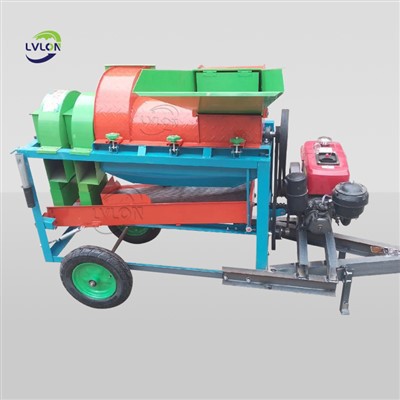
I know starting a tractor can feel intimidating if you’re new to it, but once you go through the steps a couple times, it’s second nature. And if you ever run into issues—whether your tractor won’t start, you need a replacement part, or you’re thinking of adding a new tractor to your fleet—we’re here to help. We’ve been supplying tractors to all kinds of operations for years, so we know exactly what works for different needs, and we can help you pick the right model, give you maintenance tips, and even walk you through start-up steps over the phone. Don’t hesitate to reach out to our team to chat about your tractor needs, get advice, or place an order. We’re not just suppliers—we’re farmers and landscapers too, so we get what you need to get the job done.
Huller Machine References:
- "Tractor Start-Up Procedures & Safety Guidelines," Nebraska Extension Institute of Agriculture and Natural Resources, University of Nebraska-Lincoln, 2022.
- "Maintenance Best Practices for Agricultural Tractors," Equipment & Engine Training Council, 2021.
- "Old vs. New Tractor Operating Differences," National Agricultural Machinery Dealers Association, 2020.
- "Cold Weather Tractor Starting Tips," Farm Progress, 2023.
Henan Lvlon Industrial Co., Ltd.
Address: Unit 5, 5th Floor, Building 11, No. 18 Dongfeng Road, Jinshui District, Zhengzhou City, Henan Province.
E-mail: lvlonxu@gmail.com
WebSite: https://www.lvlonmachinery.com/
