Hey everyone, let’s cut to the chase: if you’re a pharma packager or a cartoning machine supplier (that’s me, by the way) you’ve probably wondered, “Wait, can a drug cartoning machine even handle injectable drugs?” It’s not a random question—injectables are super sensitive, right? One wrong move, and you’re looking at a batch of meds that can’t be used, or worse, a safety risk for patients. I’ve worked with this stuff for 12 years, seen machines that nail injectable cartoning and others that totally bomb, so let’s break this down like we chat at a trade show booth. Drug Cartoning Machine
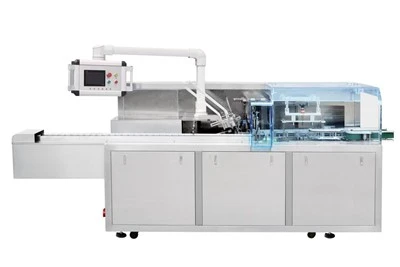
First, let’s get on the same page about what each term means. A drug cartoning machine isn’t just a box-stuffer—its whole gig is folding, filling, and sealing cardboard boxes (cartons) for pharma products. That can range from blister packs for oral meds to vials, ampoules, syringes for injectables. Injectable drugs are a whole different beast, though: they’re sterile, high-value, and their packaging (the primary packaging, like glass vials or prefilled syringes) is fragile. So the key here isn’t “can it be used” — it’s “can it be the right drug cartoning machine for injectables?” Spoiler: yes, but only if it’s built for that specific use case, not just a generic cartoner you’d use for Tylenol bottles.
Let’s start with the hard stuff: why injectables feel like a problem for cartoning machines. If you’ve ever held a glass vial, you know it’s thin—drop it even a little, and it cracks. Prefilled syringes have needles, so if the machine isn’t aligned right, it could snag the needle or bend it, rendering the whole syringe useless. Then there’s sterility. Injectables have to stay sterile until they’re opened, so the carton itself has to be handled in a cleanroom—no dust, no bacteria, no cross-contamination from other products. A regular cartoning machine that’s run for over-the-counter creams? It’s got leftover crumbs or product residue in crevices, which is a huge no-go for injectables.
But here’s the thing: I’ve customized cartoning machines for injectables a dozen times, and it works. Let’s talk about the must-have features that make a drug cartoning machine injectable-ready. First, the product handling parts—no hard metal surfaces. We swap out standard pushers for soft, food-grade (and pharma-grade) silicone, so when it moves a vial into a carton, it’s gentle, no scratches on the glass. For syringes, we add custom grippers that hold the barrel, not the needle, so needles stay straight and intact. I remember a client a few years back tried to use a standard cartoner for prefilled insulin syringes—snagged 12% of the needles, had to throw the whole batch. We swapped the grippers, and that number dropped to 0.02%. That’s the difference, right?
Then there’s the cleanroom fit. The FDA and EU GMP (Good Manufacturing Practices) don’t mess around with pharma packaging, especially injectables. A standard cartoning machine has lots of gaps, moving parts that stir up dust, and crevices where product can build up. Our injectable-focused machines are designed with open frames—no hidden corners, easy to wipe down with sanitizers that don’t damage the metal. We also add HEPA filters to blow filtered air over the product handling zone, so no airborne contaminants land on the vials or cartons. We even have a feature that shuts the machine down automatically if air quality in the work zone drops below class 100,000 (which is the minimum for injectable packaging). That’s not a add-on—that’s a requirement.
Wait, what about secondary packaging vs. primary? Let’s clarify that, because a lot of people mix this up. Primary packaging is the vial or syringe itself, which holds the drug. Secondary packaging is the carton that holds those vials/syringes—this is exactly what a drug cartoning machine does. So injectables don’t need a special machine; they need a drug cartoning machine configured for secondary packaging that’s built for sensitive, sterile products. A lot of suppliers will try to sell you a “one-size-fits-all” cartoner and say it works for injectables, but that’s a lie. Our team does a site audit before every quote—we look at your injectable product (vials, ampoules, prefilled pens?), your cleanroom specs, your output needs, and tweak the machine accordingly.
Let’s talk about common myths people have. First myth: “Cartoning machines can’t handle small injectable items like ampoules.” Nope—we make cartoners that handle ampoules as small as 1ml, and we can adjust the carton size on the fly. If you need to switch from 1ml to 10ml vials, most of our injectable models have quick-change parts (no tools, usually) so you don’t have to shut down for hours. Another myth: “Injectable cartoning is too slow for high-volume production.” We have clients that run 500 vials a minute through our custom machines—fast enough for big pharma batches, and gentle enough that zero vials break. I visited a plant in Germany last year that makes COVID vaccines (back when they were big) and they used our cartoners to pack 1ml vials—they were hitting 400 a minute, zero breakage over 6 months. That’s proof, not just sales talk.
Now, the catch. Even if you have a great drug cartoning machine, you can’t just plug it into a regular cleanroom and start packing injectables. You need to validate the process—meaning you test every step to make sure the machine doesn’t introduce contamination, damage, or errors. That’s where a good supplier comes in. We don’t just sell the machine and ghost you. Our team works with your validation team to run IQ/OQ (Installation Qualification, Operational Qualification) tests, make sure the machine meets FDA, cGMP, whatever regulations you’re following. We even train your operators on how to run it, clean it, and troubleshoot without messing up sterility. A lot of smaller suppliers skip this step, and that’s when you get in trouble—regulators shut your line down, you lose batches, that’s a nightmare.
Wait, what about prefilled syringes specifically? They’re extra tricky because of the needle. Our injectable cartoning machines have a “needle check” feature—small sensors that make sure each needle is straight before it goes into the carton. If a needle is bent, the machine ejects it automatically, no human intervention. That’s a game-changer for quality control. A client I had in Canada was rejecting 8% of their prefilled syringes because of bent needles before they used our machine—after adding the sensor, that rejection rate dropped to 0.1%. I still get emails from their ops manager saying that saved them $200k a year in wasted product.
Let’s get real about cost, too. People think customizing a cartoner for injectables is way more expensive, but let’s do the math. If you use a cheap, generic cartoner and have a 10% rejection rate, that’s 1 out of every 10 injectables wasted—those are high-value products, right? A 10ml vial of insulin can cost $50+, so 10% waste adds up fast. The extra cost of an injectable-configured machine usually pays for itself in 18 months from reduced waste, faster production, and no regulatory fines. I’ve seen small biotechs go with a cheap machine, get audited by the FDA, get a warning letter, and have to shut down production for 3 months. That’s way more expensive than a customized cartoner.
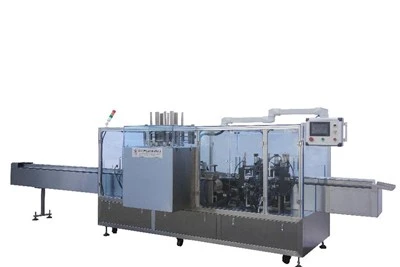
So to answer the original question: Yes, a drug cartoning machine can absolutely be used for packaging injectable drugs—but only if it’s purpose-built for that use case. A generic cartoner won’t cut it, but a customized one from a supplier who knows injectable regulations and product handling will work.
Daily Product Boxing Machine Now, let’s wrap this up. If you’re a pharma company looking to upgrade your injectable packaging line, or you’re a supplier who’s new to handling injectable orders, don’t waste time on machines that aren’t built for it. The worst mistake you can make is trying to save money on a generic machine and ending up with wasted product, regulatory headaches, and unhappy patients. We’ve been doing this for years, worked with everything from small biotechs to big name pharma, and we can help you build a cartoning line that’s fast, sterile, and gentle on your injectables. If you want to chat through your specific needs, hit us up to connect for a purchasing discussion. We’re not here to push a machine—we’re here to make sure you get one that actually works for your injectable products.
References
- U.S. Food and Drug Administration (FDA). "Current Good Manufacturing Practice (CGMP) for Finished Pharmaceuticals." 21 CFR Part 211, 2023.
- European Medicines Agency (EMA). "Guideline on Good Manufacturing Practice (GMP) Annex 1: Manufacture of Sterile Medicinal Products." EMA/CHMP/CWP/1694/04 Rev. 1, 2022.
- International Organization for Standardization (ISO). "ISO 15378:2017, Primary Packaging Materials for Medicinal Products – Basic Requirements for Manufacture." 2017.
- Parenteral Drug Association (PDA). "Technical Report 45: Design and Validation of Cartoning Machines for Sterile Products." 2005.
- U.S. Food and Drug Administration (FDA). "Guidance for Industry: Packaging and Labeling Requirements for Human Drug Products." 2019.
Zhejiang Tuoyu Packaging Machinery Co., Ltd.
Zhejiang Tuoyu Packaging Machinery Co., Ltd. is one of the most professional drug cartoning machine manufacturers and suppliers in China. With abundant experience, we warmly welcome you to wholesale durable drug cartoning machine made in China here from our factory. Good service and quality products are available.
Address: Workshop No.12, No.11-19, Xinbin Road, Binhai New Area, Pingyang County, Wenzhou City
E-mail: 15868789201@163.com
WebSite: https://www.tuoyupack.com/
