When it comes to fluid control in industrial systems, valves play a pivotal role. Among the various types of valves available in the market, globe valves and gate valves are two commonly used options, each with its own unique characteristics and applications. As a globe valve supplier, I have had the opportunity to work closely with these valves and understand their differences in great detail. In this blog post, I will delve into the key differences between globe valves and gate valves, shedding light on their design, operation, performance, and suitable applications. Globe Valve
Design
The design of a valve significantly influences its functionality and performance. Globe valves and gate valves have distinct design features that set them apart.
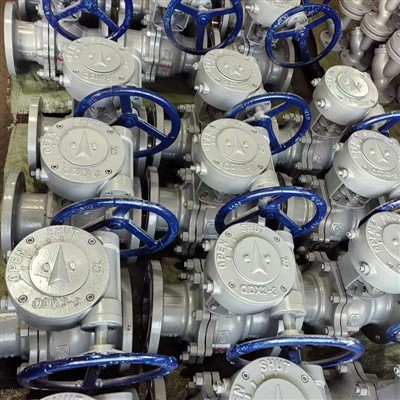
Globe valves are characterized by their spherical body shape, which gives them their name. Inside the valve, there is a movable disk that is connected to a stem. The disk moves perpendicular to the flow path, allowing it to control the flow of fluid by either opening or closing the valve. The seat of a globe valve is typically in the form of a ring, and the disk seals against this seat to stop the flow. This design provides a good throttling ability, making globe valves suitable for applications where precise flow control is required.
On the other hand, gate valves have a more straightforward design. They consist of a gate, which is a flat or wedge-shaped disk that moves up and down to open or close the valve. The gate is usually made of metal and is guided by two parallel seats. When the gate is fully raised, it allows the fluid to flow freely through the valve, and when it is fully lowered, it blocks the flow completely. Gate valves are designed primarily for on-off applications, where the valve is either fully open or fully closed.
Operation
The operation of globe valves and gate valves also differs significantly.
Globe valves are operated by turning a handwheel or using an actuator to move the stem and the attached disk. The movement of the disk is relatively slow, which allows for precise control of the flow rate. This makes globe valves ideal for applications where the flow needs to be adjusted gradually, such as in heating, ventilation, and air conditioning (HVAC) systems, or in chemical processing plants where accurate flow control is crucial.
Gate valves, on the other hand, are typically operated by turning a handwheel or using an actuator to raise or lower the gate. The operation of gate valves is relatively quick, as the gate moves in a straight line to open or close the valve. However, gate valves are not suitable for throttling applications because the gate can be damaged if it is not fully open or fully closed. Therefore, gate valves are mainly used for applications where the valve needs to be either fully open or fully closed, such as in water supply systems or oil and gas pipelines.
Performance
The performance of globe valves and gate valves can be evaluated based on several factors, including flow capacity, pressure drop, and sealing ability.
In terms of flow capacity, gate valves generally have a higher flow capacity than globe valves. This is because the gate valve has a straight-through design, which allows the fluid to flow freely without any significant obstruction. In contrast, the spherical body of the globe valve creates a more tortuous flow path, which can result in a higher pressure drop and a lower flow capacity.
However, globe valves have a better sealing ability than gate valves. The disk of a globe valve seals against the seat, providing a tight seal that prevents leakage. This makes globe valves suitable for applications where leakage needs to be minimized, such as in high-pressure systems or in applications where the fluid is hazardous.
Gate valves, on the other hand, may have a slight leakage when they are fully closed. This is because the gate may not fit perfectly against the seats, especially if the valve is not properly maintained. Therefore, gate valves are not recommended for applications where a tight seal is required.
Suitable Applications
Based on their design, operation, and performance, globe valves and gate valves are suitable for different applications.
Globe valves are commonly used in applications where precise flow control is required, such as in HVAC systems, chemical processing plants, and power generation facilities. They are also suitable for applications where a tight seal is needed, such as in high-pressure systems or in applications where the fluid is corrosive or hazardous.
Gate valves, on the other hand, are mainly used for on-off applications, such as in water supply systems, oil and gas pipelines, and sewage treatment plants. They are also suitable for applications where a high flow capacity is required, such as in large-scale industrial processes.
Conclusion
In conclusion, globe valves and gate valves are two different types of valves with distinct design, operation, performance, and suitable applications. As a globe valve supplier, I understand the importance of choosing the right valve for the specific application. By considering the factors discussed in this blog post, you can make an informed decision when selecting between a globe valve and a gate valve.
Threaded Valve If you are in need of a high-quality globe valve for your industrial application, I encourage you to contact me for a consultation. I have a wide range of globe valves available in different sizes, materials, and configurations to meet your specific requirements. Our team of experts can also provide you with technical support and guidance to ensure that you choose the right valve for your application.
References
- ASME B16.34 – Valves – Flanged, Threaded, and Welded Ends
- API 600 – Steel Gate Valves – Flanged and Butt Welding Ends
- ISO 5208 – Industrial Valves – Pressure Testing of Valves
Xiongxiang Valve Group Co., Ltd.
As one of the most professional globe valve manufacturers and suppliers in China, we’re featured by quality products and good price. Please rest assured to wholesale cheap globe valve for sale here from our factory. Contact us for more details.
Address: Building 1, No.306, 12th Binhai Road, Jinkai District, Wenzhou City, Zhejiang Province, China
E-mail: info@xiongxiangvalve.com.cn
WebSite: https://www.steelvalvegroup.com/
