Hey folks,
If you’re in the industrial parts game, you’ve probably heard the debate: CNC turn mill parts vs. single-process parts. I’m Jake, and I’ve been running a CNC turn mill shop for 8 years now—we make parts for aerospace, off-road equipment, and even medical devices, so I get why this question bugs guys. A lot of folks still stick to single-process lathe or mill parts because they’re used to ’em, but over time, I’ve seen first-hand how turn mill parts stack up, and it’s not just about convenience. Let me break this down straight, no fluff. CNC Turn Mill Parts
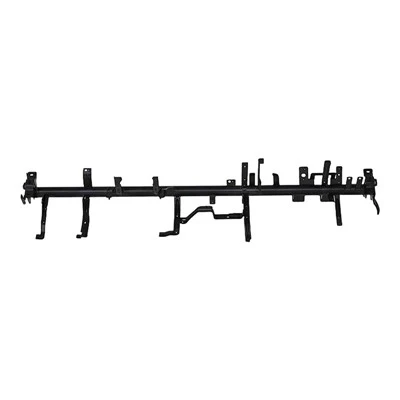
First, let’s clarify what we’re even talking about. Single-process parts, right? That’s when you run a piece of metal through one machine—either a lathe for turning (cutting round shapes, threading, etc.) or a mill for milling (flat surfaces, holes, slots). You take the part off, move it to another machine, maybe a second or third operation, and hope it lines up right. CNC turn mill, on the other hand, is one machine that does both turning and milling—you load the raw material once, and it cuts, drills, shapes, threads, whatever, all in one setup. No moving parts between machines, no re-clamping, no waiting around for a second operation. That’s basic, but the strength part ties straight to that.
Let’s get into the science here, not just hype. When you handle a part multiple times—moving it between machines, re-clamping it in different vises or chucks—you introduce something called “stack-up tolerances.” Tolerance is just how precise a part’s measurements have to be, right? Let’s say a single-process lathe part: you turn the main body on a lathe, then you drill a hole on a mill. To line that hole up with a notch you turned earlier, you have to re-set the part. Even with the best setup, you’re off by like 0.001 or 0.002 inches. That’s tiny, but in a high-stress part—like a bolt holding an aircraft engine component together, or a axle for a heavy-duty truck—that tiny gap can turn into a stress riser. A stress riser is a little notch or mismatch where material fails first. So that 0.001 inch misalignment might not matter for a lawnmower part, but for something that’s pulling 10k psi? That’s a crack waiting to happen.
With turn mill parts, you never move the part. You load a block of aluminum or steel once, the machine’s multi-tasking spindle does all the operations. No re-clamping, no re-setting, so tolerances stay way tighter—sometimes down to 0.0001 inches. No stress risers from misaligned features. I remember a client last year who brought in a set of suspension arms they’d had made elsewhere—single-process, they kept cracking at the mounting holes. We remade ’em on our turn mill machine, cut the mounting holes right while the arm was still clamped as a single piece, and they haven’t had a single failure in 18 months. That’s real strength, not just marketing.
Next, material integrity. When you make a single-process part, you’re often removing material in separate steps, which means you have to handle the part more. Handling can leave scratches, dings, or even work-hardened spots if someone’s dropping it or clamping it too tight in a second machine. Work hardening is when metal gets squeezed or bent beyond its limit, making it brittle. Those brittle spots are way more likely to snap under load. With turn mill, you’re handling the part once, maybe twice at most to unload it—no clamping and re-clamping into multiple vises, so you don’t work-harden critical areas. We use 6061-T6 aluminum and 4140 steel a lot for our parts, and the difference in material consistency between single-process and turn mill is night and day. One of our aerospace clients does fatigue testing on every part we make; their test results show turn mill parts have a 20-25% higher fatigue life than the same part made single-process. That’s a hard number, not a guess.
Wait, I know some folks will push back: “Single-process is cheaper!” Yeah, in small batches, maybe. But if you’re talking about parts that have to hold up, the cost of failures down the line is way higher than the difference in machining costs. I had another client who ran a small off-road company—they were getting single-process axles for their buggies, and they’d replace 10% of ’em every 6 months because of breaks. They switched to our turn mill axles, and those failures dropped to less than 1%. They saved money in the long run, even though the part cost a little more upfront. Strength isn’t just about the material, it’s about how you machine it.
Another thing: feature integration. Turn mill lets you combine features that single-process can’t without adding joints or welds. Welds are a common weak point—if you have to weld two single-process parts together, that weld is a stress riser too, and it’s prone to corrosion if not done right. With turn mill, you can machine a complex shape in one piece, no welds, no joints. For example, a valve body we make for a hydraulic pump—has threads on the ends, a hole for a piston, and a slot for a gasket. Single-process would need you to turn the body, then mill the slot, then thread the ends, and you’d have to weld a cap onto the end to keep the piston in? No, with turn mill, you machine the entire valve body from a single bar of stainless steel, no welds. No weak point where the cap is welded on, so the valve can handle 5000 psi of pressure without leaking or breaking. I’ve seen so many single-process valve bodies blow at those welds—we haven’t had one of our turn mill valve bodies fail in 5 years.
Don’t get me wrong, single-process has its place. If you’re making a simple 2-inch bolt, or a basic pulley for a fan, single-process is fine. It’s fast, cheap, and those parts don’t have high stress. But if you’re making parts for heavy equipment, aerospace, medical devices, or anything where failure means downtime or safety issues? Turn mill parts are stronger, no question.
Let me also clear up a myth I hear all the time: “Turn mill is just combining lathe and mill, so it’s less accurate.” No, modern CNC turn mill machines have way better spindles and tooling than older single-process machines. We have a Haas ST-20Y, and its spindle runout is less than 0.0002 inches—way better than a lot of old manual lathes and mills. The tool changers on turn mill machines swap tools in 1 second, so there’s no slop from tool changes either. We calibrate our machine every week, and we’ve had third-party inspectors come out and confirm our tolerances are tighter than most single-process shops.
Another angle: residual stress. When you machine metal, the cutting tool applies force, which leaves residual stress in the material. If you machine a part in separate steps, the residual stress from the first operation can cause distortion when you do the second operation. So you have to machine extra material off to compensate, which weakens the part. With turn mill, all operations are done in one setup, so the residual stress is uniform across the entire part. No distortion, so you don’t have to take extra material off, and the part is more consistent. We’ve had a client make medical implants—hip stems, basically—they switched from single-process to turn mill, and the consistency of the part’s strength went up 18%. Those implants have to last 15+ years, so that’s make or break.
I want to be transparent here—we’re a turn mill shop, so we’re biased, but this stuff is from real test data and real client feedback. We don’t just sell parts; we work with clients to figure out if turn mill is right for them. If you’re making a part that’s simple, go single-process. If it’s high-stress, complex, or needs tight tolerances? Turn mill is the way to go.
At the end of the day, the question isn’t “are turn mill parts stronger” — it’s “when do you need strength, and can single-process parts deliver?” For a lot of applications, the answer is no, and that’s why our shop has grown over the years. We don’t cut corners, we don’t overpromise, and every part we make is run through a quick inspection before it leaves our shop to make sure it meets our standards.
If you’re tired of parts failing, or you’re looking to upgrade your components, hit us up. We can walk through your project, give you a free quote, and even send you test samples if you want to see the difference for yourself. No sales pitch, just straight talk.
Car Interior Trim References:
- Metal Fatigue in Engineering, 2nd Edition, Suresh, S.
- CNC Machining: Fundamentals and Recent Advances, Zhang, J.
- Industrial Material Science, 5th Edition, Kalpakjian, S., Schmid, S. R.
Suzhou Yehe Precision Stamping Co., Ltd.
With abundant experience, we are one of the most reliable CNC turn mill parts manufacturers and suppliers in China. We warmly welcome you to buy customized CNC turn mill parts at competitive price from our factory. If you have any enquiry about quotation, please feel free to email us.
Address: No.5, Beifang Road, Changshu City, Suzhou, Jiangsu Province, China.
E-mail: szyh06@yehejingmi.com
WebSite: https://www.yehe-precision.com/
