If you’ve ever worked in mining, quarrying, aggregate processing, or material handling, you’ve probably heard the terms “screen box” and “grizzly screen” thrown around—but few people outside the industry can clearly explain how they differ. As a supplier of quality screen boxes, I spend hours every day walking clients through this distinction, because mixing up the two can lead to wrong equipment purchases, lost productivity, and even safety risks on job sites. Over the years, I’ve seen firsthand how contractors rush to buy what they think is the right solution, only to end up with a tool that doesn’t fit their specific material processing needs. Let’s break down exactly what each is, where they’re used, and why choosing the right one matters. Screen Box
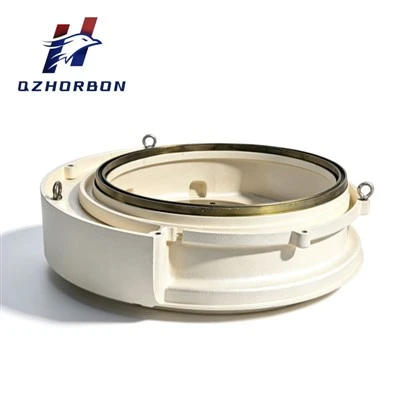
First, let’s start with the basics: both are types of screening equipment, but that’s where the similarity ends. To truly understand their differences, you have to look at their design, purpose, placement on a processing line, and how they handle material. A screen box is a modular, vibrating structure that holds a screen mesh (or other screening media) to separate materials into different size fractions. It’s the core component of most vibrating screens used in secondary or tertiary screening, after raw material has been crushed or sized. On the other hand, a grizzly screen is a heavy, static (or rarely vibrating) bar structure, usually the first piece of equipment a raw material hits when it exits a primary crusher. Think of it as a rough, upfront sifter that takes care of the big, bulky material so downstream equipment doesn’t get overloaded or damaged.
Let’s dive deeper into design specifics, because that’s where the functional differences come from. A standard screen box I supply is built with a rigid steel frame, often lined with abrasion-resistant steel to withstand repeated vibration and impact. Inside, it features a screen deck that holds woven wire mesh, polyurethane panels, or punch plate media—each chosen to separate specific particle sizes, usually from fine 2mm dust up to 100mm stones. The entire unit vibrates at controlled frequencies (anywhere from 100 to 1800 vibrations per minute) to move material across the deck, with smaller particles falling through the screen openings and larger ones being discharged as oversize. The design is precision-engineered for consistent sizing, so it’s used when accuracy in particle separation is key.
Grizzly screens, by contrast, are far simpler in construction. They’re made of heavy steel bars (usually 100mm to 300mm thick) arranged in parallel gaps, with gaps ranging from 50mm up to 300mm—you won’t find a grizzly screening anything smaller than, say, 20mm. Most stationary grizzlies are mounted at a slight incline (15 to 25 degrees) to let material flow downward naturally; only specialized vibrating grizzlies have moving parts, and even those have much lower vibration frequencies than screen boxes. The bars themselves are angled slightly forward to prevent material from getting stuck, and they’re spaced wide enough only to let small, unwanted fines pass through—no precision sizing here. Their whole job is to “grizzly” out the oversized chunks before they enter the next stage of processing.
Now, placement in a material processing line is another critical difference that’s often misunderstood. Screen boxes belong in the mid-to-late stages. Let’s walk through a typical aggregate production line: a primary crusher breaks large boulders into chunks, which then go to a grizzly screen first. The grizzly skips out any oversize boulders that didn’t break properly and removes excess fines that would clog the next crusher or screen. The remaining material, now properly pre-sized, moves to a conveyor that feeds into a screen box. That’s where the material is split into finished sizes—say, 10mm, 20mm, and 40mm aggregate for concrete, road base, or asphalt. You’ll find screen boxes also in recycling operations, where they separate crushed concrete or asphalt into usable fractions for road repair.
Grizzly screens, by design, belong at the very beginning. They’re the first line of defense. If a large boulder from the primary crusher is too big for downstream equipment (which can get jammed or damaged by uncrushed material), the grizzly catches it. If there’s too much fine material that would slow down the secondary crusher, the grizzly removes it before it reaches that stage. I’ve had clients tell me they tried to put a screen box at the front of the line once, only to have the heavy, irregular boulders tear the mesh in a week—something a grizzly’s solid bar structure would never handle. Screen boxes aren’t built for that kind of heavy initial impact; their mesh is thin enough to separate fine particles, so big chunks will quickly destroy it.
Handling different material types is another way they diverge. Screen boxes are versatile for most processed materials: crushed rock, sand and gravel, recycled concrete, coal, even food products like grain or sugar. But they work best with relatively consistent, pre-sized material. If you feed a screen box a mix of oversized boulders and fine dust, the boulders will bounce around, cover the mesh, and prevent small particles from falling through—called “blinding.” That’s where the grizzly’s strength comes in. Grizzly screens handle extremely heavy, irregular, mixed material: raw mine ore straight from a blast, oversized rubble from demolition, unprocessed river rock. Their thick bars can withstand the impact of 1-ton boulders, and their wide gaps let fines pass without clogging. I once worked with a gold mining client who tried to use a screen box to sort run-of-mine ore, and within three days, the mesh was completely torn. Swapping in a stationary grizzly fixed the issue immediately, cutting downtime by 90%.
Vibration and operation are also key differences. Screen boxes rely on controlled, high-frequency vibration to move material and separate particles. The vibration is generated by eccentric weights on a shaft, and the angle of the screen deck is adjusted to optimize flow—steeper for finer materials, shallower for coarser. This precision means a screen box can have multiple decks, each with a different mesh size, to separate three or four product sizes in one pass. Grizzly screens, especially stationary ones, don’t vibrate at all. They’re passive: material flows over them by gravity. The rare vibrating grizzlies used in high-capacity mining have much lower vibration rates (around 100-200 vibrations per minute) than screen boxes, so they don’t shake material apart or damage themselves. You’ll never see a grizzly with multiple decks; it’s a single deck for rough separation.
Cost and maintenance are practical factors that matter to any operations manager. Screen boxes are more expensive upfront, because they have precision steel frames, custom screen media, and vibrating motors. Maintenance is also higher: screen media needs to be replaced every few weeks to a few months, depending on material hardness, and bearings need regular lubrication. Grizzly screens, on the other hand, are low-cost and low-maintenance. A stationary grizzly might last 10+ years with little more than occasional cleaning to remove stuck material. The only time you need to replace grizzly parts is if a bar breaks from extreme impact—and even then, replacing a single bar is much cheaper and faster than replacing a whole screen box deck. That said, grizzlies don’t offer the precision sizing a screen box does, so you can’t use them to make finished products that require specific particle sizes. I often tell clients: use a grizzly for rough prep, a screen box for finished sizing.
Let’s clear up a common misconception: some people call grizzly screens “roughing screens,” and screen boxes “finishing screens”—that’s a good shorthand, but not always 100% accurate. There are vibrating grizzlies that can do a little more than just rough separation, and some small, compact screen boxes can handle very fine material with high accuracy. But for most industrial applications, that’s the general rule. I’ve seen contractors try to use a grizzly as a screen box, ending up with inconsistent product sizes that don’t meet road or construction specifications. Conversely, a client once tried to skip the grizzly and run raw material straight to the screen box, resulting in $15,000 in damage to a single screen deck from uncrushed boulders. That’s a mistake I warn new clients about constantly.
As someone who’s supplied both screen boxes and grizzly screens for over a decade, I can tell you the biggest mistake people make is thinking one can replace the other. They’re complementary, not interchangeable. A good processing line will use both: the grizzly to prep the material, the screen box to make the finished products. When you pair them correctly, you get higher efficiency, less downtime, and a better end product. I’ve worked with a quarry in Texas that upgraded their line by adding a stationary grizzly before their existing screen box, and they saw a 22% increase in production rate and a 30% drop in screen media replacement costs. That’s the kind of ROI that makes choosing the right equipment so important.
If you’re in the market for screening equipment—whether you’re replacing a worn screen box, adding a grizzly to your processing line, or just need guidance on what fits your project—reach out to our team to discuss your specific needs. We don’t believe in one-size-fits-all solutions, and we’re here to help you pick the right tools for your material, your line, and your budget.
Crusher Seals References
- G. B. E. R. A. Handbook. (2021). Screening Equipment for Aggregate Processing. Global Mining and Technology Press.
- Smith, J. D. (2019). Material Handling and Screening: Design and Application. Industrial Equipment Publishers.
- National Stone, Sand & Gravel Association. (2020). Best Practices for Aggregate Processing Lines. Industry Standards and Training Division.
- Davis, L. P. (2018). Vibrating Screen Design and Maintenance for Mining Operations. Journal of Mineral Processing Technology, 42(3), 112-127.
Quzhou Horbon Mining Parts Co., Ltd.
Quzhou Horbon Mining Parts Co., Ltd. is one of the most professional screen box manufacturers and suppliers in China, featured by high quality customized service and OEM service. Please rest assured to buy premium screen box at competitive price from our factory. Contact us for pricelist.
Address: No.8 Nanshan Road, Qujiang District, Quzhou City, Zhejiang Province, China
E-mail: horbonmining@gmail.com
WebSite: https://www.horbonmachinery.com/
