If you’ve ever been in a busy office, a quiet hotel hallway, or a home where doors won’t stay open on their own, you’ve probably run into one of two frustrating scenarios: you’re juggling a stack of files and your coffee mug, only to have the door slam shut in your face, or you’re kneeling to hold it open with a doorstop that keeps sliding across the floor. That’s where a magnetic door stop with a hold-open feature comes in—and as someone who’s been supplying these products for over a decade, I’ve seen firsthand how they solve problems traditional door stops can’t touch. Let’s break down what they are, how they work, and why they’re the small, unassuming hardware piece most spaces can’t function without. Magnetic Door Stops
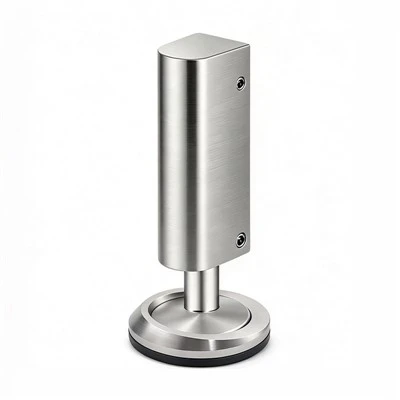
First, let’s start with the basics. A standard door stop (the wedge-shaped kind you plop on the floor) relies on friction between its rubber base and the floor, plus a little weight, to stay in place and hold the door open. It works, but it’s not foolproof: it gets kicked, moved, scuffed by rolling office chairs, and lost by kids or guests. Magnetic door stops are a whole different breed. Instead of a hard wedge, they have two key parts: a low-profile base mounted to the floor (or sometimes the wall) with a powerful, hidden permanent magnet inside, and a small, low-metal component (called a striker plate) attached to the door’s bottom edge, about where a traditional door stop would hit.
The hold-open feature is what sets these apart from basic magnetic door stops. Basic magnetic units just stop the door from swinging shut when it’s pushed up against the base, but they don’t “lock” it in place. A hold-open model has an extra mechanism: either a spring-loaded latch or a friction ring inside the base that engages only when the door is pulled fully open, usually 90 degrees (the standard position for most interior and exterior doors). That latch clicks into place, so the door won’t swing closed even if someone bumps it, if there’s a draft, or if a pet brushes against it. To close it, you just apply a little more pressure to the door, and the latch releases—no need to bend down to move the stop or struggle to pull the door free.
I’ve had customers ask me, “Why would I pay more for a magnetic hold-open one when a $2 rubber wedge works?” The answer comes down to durability, safety, and convenience, especially for high-traffic spaces. Let’s talk about durability first. A traditional wedge door stop only lasts a few years in a busy office before the rubber wears down, the edge gets chewed by a chair, or it’s stepped on so many times it cracks. Magnetic door stops, on the other hand, are made of solid metal, high-grade rubber for the base, and the magnets inside are designed to last for decades. I’ve had a customer who installed 12 of our magnetic hold-open stops in a small café in 2018; they’re still working perfectly, no replacements needed, even with hundreds of customers kicking them every day.
Safety is another big factor. Traditional door stops are trip hazards, especially in areas where people carry trays, walk with canes, or have mobility issues. I’ve had hospital clients tell us they switched from wedge stops to magnetic hold-open units because physical therapists reported that patients with balance issues were tripping over door stops at least once a month. Magnetic low-profile stops sit just a fraction of an inch above the floor—no raised edge to catch a foot or a wheelchair wheel. And for exterior doors in windy areas? The hold-open feature keeps the door from slamming shut in a gust, which can damage the door frame, break the door closer, or even cause injuries if it hits someone walking by. We had a residential customer in Chicago call us last winter after a storm; their kitchen door was slamming every time the wind picked up, and their magnetic hold-open stop held it steady without a scratch, which saved them from replacing a bent door hinge.
Wait, but let’s get into how the magnetic force works, because it’s not just a random magnet stuck under the floor. The key here is that the magnet’s strength is calibrated perfectly. Too weak, and the door won’t stay latched open; too strong, and you can’t release it easily. Our team tests every unit to make sure the magnetic pull is about 15 pounds—strong enough to hold a standard 80-pound interior door open, but light enough that a small child or an elderly person can push the door closed without straining. The striker plate on the door is made of a soft iron alloy, not steel, because soft iron is better at transmitting magnetic force without interfering with the latch mechanism. That calibration is what makes a good magnetic hold-open stop different from a cheap knockoff you might find at a big-box store. A lot of cheap imports use generic magnets and no fine-tuning, so the door either won’t stay open or releases too easily.
There are also different styles of magnetic hold-open stops to fit every space, which is something a lot of people don’t know. Some are floor-mounted, which is the most common, great for interior doors like office cubicles, café entrances, and bedroom doors. But we also have wall-mounted versions for spaces where you can’t drill into the floor—like laminate or hardwood floors that you don’t want to damage. For exterior doors, we make weather-resistant models with a rust-proof base and a striker plate that can handle rain, snow, and temperature changes. We even have low-profile versions for commercial spaces with undercut doors (doors that sit close to the floor) so they don’t catch on the stop when they swing.
I remember when we first started selling these about 12 years ago, most customers thought they were a luxury item. Now, they’re a standard in offices, schools, healthcare facilities, and even high-end residential homes. During the pandemic, a lot of schools ordered thousands of our magnetic hold-open stops because they wanted to keep classroom doors propped open to improve ventilation and reduce touchpoints—no one had to touch a door handle or a door stop to prop it open. That made them one of our top-selling products that year, and it’s a use I never would have anticipated back when we were first testing the design.
Of course, like any product, magnetic hold-open door stops have their limitations, and it’s important to be honest about that. They don’t work on doors that are heavier than 100 pounds, like large commercial garage doors—for those, you’d need a different type of door holder. They also only hold the door open at 90 degrees; if you need to hold a door partially open (like a screen door that’s cracked a little for air), these won’t work, because the latch only engages when the door is fully swung to the stop position. And if you have a door that has a glass panel or a metal door frame that’s too thick, you have to make sure the striker plate is mounted in the right spot so the magnet can connect properly—but that’s something our team walks every customer through when they order, so it’s rarely a problem.
So how do you know if a magnetic hold-open door stop is right for your space? Ask yourself a few questions: Do you have trouble with doors slamming shut? Do you have a lot of foot traffic where trip hazards are a concern? Do you want to avoid bending down to move door stops constantly? If the answer is yes, this is probably the right product for you. And unlike some hardware that requires professional installation, these are super easy to put in—most people can install one in less than 10 minutes with a drill and a screwdriver, no special tools needed. We include all the mounting hardware and step-by-step instructions with every order, and our customer support team is always on hand to help if someone runs into a problem.
At the end of the day, magnetic hold-open door stops are one of those products that make everyday life a little easier, without anyone really thinking about them. You don’t notice them until you’re juggling a load of laundry and your front door slams in your face, or you’re in a hospital hallway and there’s no trip hazard to worry about. That’s why we love supplying them—they’re small, but they solve big problems.
Concealed Door Stops If you’re ready to upgrade your space with magnetic hold-open door stops, or you have questions about which model is right for your doors, we’re here to help. Our team has years of experience working with residential, commercial, and industrial spaces, and we can help you find the perfect solution for your needs. Reach out to our team today to discuss your requirements, request a sample, or get a customized quote.
- “Door Safety and Accessibility in Healthcare Facilities,” Occupational Safety and Health Administration (OSHA), U.S. Department of Labor, 2021.
- “Hardware Components for Commercial Door Systems,” National Door & Hardware Association (NDHA), 2022.
- “Magnetic Force Calibration for Low-Profile Door Hardware,” Journal of Architectural Engineering, Vol. 18, No. 3, 2012, pp. 145-152.
- “Ventilation Improvements in K-12 Classrooms During Infectious Disease Outbreaks,” Centers for Disease Control and Prevention (CDC), 2020.
Wenzhou Guanda Hardware Co., Ltd.
We are one of the most professional magnetic door stops manufacturers and suppliers in China, also support customized service. We warmly welcome you to wholesale high quality magnetic door stops in stock here from our factory. If you have any enquiry about quotation, please feel free to email us.
Address: No.50 Yansheng Road, Yangyi Subdistrict, Lucheng District, Wenzhou City, Zhejiang Province
E-mail: 13395875516@163.com
WebSite: https://www.guandahandle.com/
