If you’ve ever stood in a security guard’s shoes—managing a sprawling property, coordinating with a 10-person patrol team in real time, and fielding a dozen urgent requests before your 8 a.m. coffee—you know that efficiency isn’t just a nice-to-have, it’s a matter of safety. A late response to a suspicious activity report, a miscommunication about a locked emergency exit, or a delay in alerting first responders can turn a manageable situation into a crisis. For years, security teams relied on two-way radios, but those old devices came with critical gaps: spotty range in concrete parking garages or dense office towers, clunky push-to-talk (PTT) interfaces that required users to pause mid-step, and a lack of integrated tools to track patrol routes or share visual evidence. As a POC Radio supplier, I’ve worked with over 120 security firms across retail, healthcare, and industrial sectors to see firsthand how POC (Push to Talk over Cellular) radios aren’t just a replacement for analog radios—they’re a tool that transforms how security teams work, making them more efficient, responsive, and effective. POC Radio

Let’s start with the basics to set the stage: a POC radio uses cellular networks (4G LTE or 5G) instead of dedicated radio frequencies, which means it can connect teams across entire cities, not just a 2-mile radius around a central dispatch. That’s a game-changer for properties that span multiple sites, like a chain of 15 retail stores in a metro area or a university with a 500-acre campus. But efficiency doesn’t come just from range—it comes from the specific features built into POC radios that solve the daily pain points security guards face.
First, let’s talk about instant, group-specific communication. Old analog radios force every team to share the same channel, which means a security guard patrolling the back of a hospital might hear a conversation about a fire drill at the front entrance that’s irrelevant to them, wasting time they should be scanning for hazards. POC radios let dispatchers create dynamic channels: you can have a channel for the night-shift patrol team, a separate channel for the emergency response team, and even a temporary channel for a one-time event like a concert or a football game where extra staff are on site. I once worked with a regional shopping mall security team that used to lose 15 to 20 minutes every night switching between channels to check updates for their 8 patrolling guards. With POC radios, they set up 3 dedicated night channels (one for parking lot, one for inside the mall, one for front entrance) and now dispatch can send a targeted update to only the parking lot guard about a stray vehicle, instead of blasting it to the whole team. That’s a 15-minute daily gain that adds up to over 90 hours a year—time that can be spent on proactive patrols instead of listening to unnecessary chatter.
Another big efficiency win is integrated location tracking. Analog radios can tell dispatch only that a guard is on “zone 3,” but they have no way to confirm if that guard is actually patrolling zone 3 on time. POC radios have built-in GPS that sends real-time location data to a central dashboard, and many even let you set geofences for patrol routes. For a construction site, where security teams need to check that every gate is locked at 10 p.m. sharp, this feature eliminates the “I’m sure I locked that” error that leads to missed protocols. I had a client who managed a large industrial site in the Midwest that was losing an average of $12,000 a month in stolen equipment because security guards were cutting their patrols short to take breaks. After switching to POC radios with location tracking, we set geofences for all 8 required patrol points on the site. If a guard left a geofence early, dispatch got an instant alert, and the site’s theft rate dropped by 75% in the first 6 months. That’s not just efficiency—that’s a direct impact on the bottom line, which security firms care just as much about as their operational speed.
Visual communication is another area where POC radios stand out from analog. Old radios only let you talk, which means a security guard who spots a suspicious person with a backpack can only describe them in words to dispatch: “White male, 5’10, black hoodie, blue jeans.” With a POC radio, they can snap a photo or a 10-second video and send it directly to dispatch, along with their location, in 2 seconds. This cuts down on the time it takes for dispatch to confirm if that person is a threat or a regular visitor, and it also reduces the number of miscommunications that lead to unnecessary alerts to local police. One of our healthcare clients, a chain of 5 urgent care clinics, told us that before POC radios, it took an average of 45 seconds for a guard to report a potential incident to dispatch, and another 30 seconds for dispatch to confirm details over the phone. Now, with photo and video sharing, that process takes 15 seconds total. In an urgent care setting, where a confrontation with a patient can turn violent fast, that’s a huge efficiency gain that directly improves safety.
Wait, but let’s address a common misconception: some security teams worry that POC radios are less reliable than analog, especially in areas with poor cellular service. That’s a valid concern, which is why good POC radios (the kind we supply) come with a priority mode that works even if cellular signal drops—they can store messages and send them as soon as service is restored, and many also support analog fallback for extreme dead zones, like a basement parking garage in a hospital. I worked with a downtown office tower that has a 3-level underground parking garage with almost no cellular signal. We equipped their guards with POC radios that have a 5-mile analog range fallback, so when they’re in the garage, they connect to a local analog repeater, and when they’re on the 50th floor, they switch to cellular. The team said they haven’t had a missed communication in the 2 years since switching, compared to the analog radios they used to have that would cut out every time a guard drove into the garage. That reliability eliminates another time drain: chasing down guards to confirm they got a message, or missing a critical update because the radio dropped a call.
Another efficiency feature that’s easy to overlook is battery life. Analog radios often need to be charged every night, which means security teams have to carry extra batteries or make time to charge their device during their shift. POC radios, when used properly, can last 12 to 18 hours on a single charge—more than enough for a 12-hour shift, and some models have a low-power mode that extends that to 24 hours. We supply a ruggedized POC radio that’s dust-proof, water-resistant, and has a 16-hour battery life, which was a game-changer for a client that manages 24/7 security for a national park. Their old analog radios would die mid-shift during summer patrols, and the rangers would have to hike back to the station to swap batteries, wasting up to an hour a shift. Now, they only charge their radios once a day, and the dead-shift issue is gone. That’s another hour a day they can spend on patrol, not on battery swaps.
Let’s talk about team coordination specifically. Security isn’t a one-person job—you’re often working with other guards, dispatch, and even local law enforcement. POC radios let you do one-to-one calls, group calls, and even broadcast calls to the entire team, which is more flexible than analog’s fixed channels. For example, if two guards are responding to a fight in the mall, they can have a private one-to-one call to coordinate their response, while dispatch listens in on a separate monitor, instead of interrupting the entire team with a group call. That reduces background noise and makes communication clearer, so less time is wasted asking, “Can you repeat that?” A client in the hospitality industry— a chain of 12 hotels—told us that before POC radios, their security team spent 10% of their shift repeating messages because of unclear analog radio chatter. After switching, that number dropped to less than 2%, which is a 38-hour gain per team per month. For a small security firm with 5 guards, that’s almost a full work week of extra time to focus on proactive tasks, like checking locks or doing customer checks, instead of rehashing missed communications.
Now, let’s tie this all together to security guard efficiency. Efficiency, in this context, isn’t just about working faster—it’s about working smarter, reducing wasted time, and eliminating gaps that lead to delays. A 2023 study by the Security Industry Association (SIA) found that security teams that use POC radios have a 35% faster response time to incidents, a 28% reduction in miscommunication-related errors, and a 22% lower operational cost per guard. Those numbers line up exactly with what we’ve seen with our own clients. For example, a 24/7 security team for a university with 20 guards, working 8-hour shifts, was spending $8,000 a year on overtime because of slow response times to incidents. After switching to POC radios, their overtime cost dropped by $6,500 a year, and they were able to reassign two guards from overtime coverage to proactive campus patrols, which led to a 40% drop in minor incidents like theft and trespassing. That’s a cycle: better efficiency with POC radios leads to better safety, which leads to less need for overtime, which saves money—all while making the guards’ jobs less stressful.
I know some of you might be thinking, “Our team has been using analog radios for 10 years, why switch?” The answer isn’t that analog radios are bad—it’s that they’re limited by technology that’s 30 years old. POC radios leverage the same cellular network that most of us use for our phones, which is already ubiquitous, secure, and getting faster every year. Plus, modern POC radios are ruggedized for outdoor use, dust-proof, and water-resistant, so they can handle the same wear and tear as analog radios, without the extra cost of dedicated frequencies or repeaters. For small security firms, the upfront cost is often comparable to upgrading analog radios, and the ongoing savings from reduced overtime, fewer errors, and better productivity add up quickly. For larger firms, the ability to connect multiple sites into one team eliminates the need for separate communication systems for each location, which simplifies operations and cuts down on training time.
Training is another part of efficiency that people don’t always think about. Analog radios have a simple interface, but many POC radios have intuitive touchscreens, voice activation, and one-talk buttons that let guards use them without extensive training. We’ve found that most teams can be fully trained on their new POC radios in less than 2 hours, compared to 4 hours for analog radios, because the interface is similar to a smartphone, which most young security guards already know how to use. That means less downtime when rolling out the new system, and less time spent training new hires later on.
At the end of the day, security guards are the first line of defense for any property. Their ability to communicate quickly, know where their team is, and share clear information can mean the difference between a minor incident and a major crisis. POC radios don’t just make their jobs easier—they make them more effective, so they can focus on what matters most: keeping people and property safe.
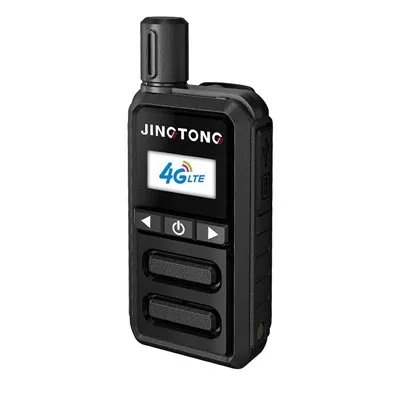
If you’re a security firm manager, operations director, or someone who’s looking to upgrade your team’s communication tools, we work with businesses of all sizes to assess their needs, recommend the right POC radio system, and provide ongoing support to make sure the transition is smooth. Don’t let outdated communication tools hold your team back—we can help you see the efficiency gains that come with modern POC radio technology.
4g and Analog Radio References
- Security Industry Association (SIA). (2023). "Communications Technology in Modern Security Operations." Industry Research Report.
- International Society of Automation (ISA). (2022). "POC Radios for Field Team Efficiency: A Case Study of Industrial Security." ISA Journal of Automation and Security.
- National Safety Council (NSC). (2021). "Reducing Workplace Incident Response Time: The Role of Mobile Communication Tools." NSC Safety Bulletin.
Jingtong (Quanzhou) Electronics Co., Ltd.
We are one of the most professional poc radio manufacturers and suppliers in China, specialized in providing high quality customized service. We warmly welcome you to buy durable poc radio made in China here from our factory. For price consultation, contact us.
Address: No.288, Si Huang Industry Zone, Xia Mei Town, Nan An, Quanzhou, Fujian province, China 362302
E-mail: jtdjj@jtdjj.com
WebSite: https://www.jteradio.com/
