Hey everyone, it’s Alex, here from your go-to titanium glasses supplier—today I’m breaking down one of the most common questions I get from first-time buyers and repeat customers alike: “Does titanium glasses rust?” Titanium Glasses
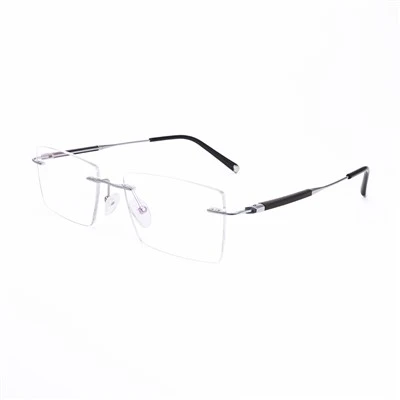
I lose count of how many times this question pops up when folks are comparing our titanium frames to steel, aluminum, or even cheap alloy options at the mall. A lot of people come to us after a bad experience: their old budget frames started turning splotchy, leaving green marks on their nose pads, or corroding so badly the hinge seized up after a few months. So it makes total sense they’re wary of metal glasses that hold up to daily wear—sweat, rain, cleaning sprays, even the occasional drop in a puddle.
First, let’s get one basic fact straight that most casual explanations skip: rust isn’t just any metal corrosion. Rust is specifically iron oxide, right? It only forms when iron or an iron alloy (like regular steel) reacts with oxygen and moisture. That’s the key distinction here, and it’s the foundation of why titanium is such a game-changer for eyeglass frames. But I’m not just here to throw a quick science fact at you—let’s dig into the different types of titanium we use, how they hold up in real-world conditions, and what that actually means for your everyday wear.
Here’s the thing: not all titanium is created equal for glasses. When I started this business, I worked with a metallurgist friend to test every grade we source, because a lot of suppliers will cut corners with lower-grade titanium that doesn’t have the same corrosion resistance. The titanium we use for our frames is Grade 5 titanium, often called Ti-6Al-4V—meaning it’s made of 6% aluminum and 4% vanadium, with the remaining 90% pure titanium. That’s the workhorse grade for aerospace, medical implants, and, yeah, high-end eyeglasses, because it balances strength, light weight, and corrosion resistance perfectly.
Now, let’s talk about how that corrosion resistance works, because it’s not magic. When titanium is exposed to oxygen (which is everywhere—air, water, even your skin’s natural oils), it forms what’s called a passive oxide layer. It’s a super thin, almost invisible layer, just a few nanometers thick, that adheres tightly to the titanium surface. This layer acts like a shield—it prevents oxygen and moisture from getting to the pure titanium underneath. Unlike steel, which scratches that layer and starts rusting from the exposed spot, if you scratch or nick titanium (say, from dropping it on a concrete sidewalk), that passive layer instantly repairs itself, as long as there’s oxygen present. That’s a huge deal for durability.
But wait—does that mean titanium glasses will never corrode at all, even in extreme conditions? Let’s be real: nothing’s indestructible. I once had a customer send us a pair of our frames that he’d worn surfing every day for a year—saltwater, sand, all that stuff—wondering if we could replace the nose pads (which we did, no cost). The frame itself? No rust, no pitting, just a tiny bit of salt residue that wiped off with a microfiber cloth. That’s not an anomaly. We’ve had frames returned from customers who worked in construction, lived in humid tropical climates, even wore them while sweating through marathon training—all without a single spot of rust.
But I want to address a common confusion here. Some people mix up corrosion with discoloration, or with the green staining you get from cheap nickel alloys. Our titanium frames rarely discolor even after years of use, but in some very specific cases, you might see a faint, dull grayish patina. That’s not rust—it’s the same passive oxide layer building up, or sometimes a tiny amount of skin oils or sunscreen residue that’s settled into tiny surface scratches. It doesn’t damage the frame at all, and it’s easy to clean off with a little mild soap and water. The green marks? That’s from copper or nickel in cheap alloy frames leaching into your skin—something you’ll never see with our titanium, because Grade 5 titanium doesn’t contain those metals.
I should also mention another point of confusion: sometimes suppliers will call stainless steel “titanium” to cut costs. Stainless steel is an iron alloy, so it can rust—especially low-grade stainless steel used in cheap frames, which often has high amounts of carbon and other impurities that make it more prone to corrosion. That’s why it’s so important to ask about the grade of titanium (or any metal) when you’re buying glasses. We always list the grade of titanium on our product pages, because we don’t do that bait-and-switch—we want our customers to know exactly what they’re getting.
Let’s circle back to that real-world use case, because that’s what matters most when you’re choosing glasses. How does this hold up to daily wear? Let’s break down the things your glasses go through:
- Sweat: You’re at the gym, or walking in 90-degree heat, sweat drips down your face and onto the frames. For steel frames, that’s a recipe for rust over time, because salt in sweat breaks down the protective layer. For titanium, the passive layer just repels the sweat, and a quick wipe with a cloth later, it’s good as new.
- Rain: Unexpected downpour, get caught in a thunderstorm, even wear them in snow (if you’re into winter sports)? Rain is slightly acidic in some areas, but titanium’s passive layer is resistant to all but the strongest acids—way more than steel. We’ve tested our frames in a salt spray chamber (the same test used for marine parts) for 500 hours, and there was zero corrosion. That’s equivalent to years of coastal living.
- Cleaning products: If you use window cleaner, lens spray, or even dish soap to clean your glasses, can that damage titanium? No, not the good stuff. Harsh chemicals might discolor cheaper metals, but they don’t affect the passive oxide layer on Grade 5 titanium. We tell customers to avoid ammonia-based cleaners, but even those won’t rust titanium—they just might make the frame look dull until you rinse it off.
Now, I’ve been in this business for 7 years, and I’ve seen almost every issue with glasses frames. The only time I’ve ever seen actual rust on a pair someone thought was titanium was when they bought a $20 pair from a gas station that was just steel coated to look like titanium. That’s the misinformation I want to clear up: real titanium glasses, made with Grade 5 titanium, do not rust. At all.
But here’s the catch for our wholesale customers (hint: that’s who this is for, since I’m reaching out to boutique eyewear stores, online retailers, and optometrists): if you’re buying bulk frames to resell to your customers, you need to make sure you’re getting that Grade 5 titanium, not a lower grade or a coated metal. We’ve had a few small retailers come to us after getting burned by another supplier who sent “titanium” frames that started rusting within 6 months. The frames we provide? We stand behind a 2-year warranty on all our titanium frames, because we know they won’t rust, won’t bend out of shape easily, and won’t cause that annoying skin discoloration your customers hate.
Another point that our retail customers love: titanium’s hypoallergenic properties, which go hand-in-hand with its corrosion resistance. A lot of people have metal allergies—nickel allergy is super common, affecting around 10% of adults, especially women. Our Grade 5 titanium frames are nickel-free, so even customers with the most sensitive skin can wear them without getting rashes or irritation. That’s a huge selling point for eyewear businesses, because it opens up your customer base to people who can’t wear traditional steel or alloy frames.
Let me answer the follow-up question I always get after that: “Okay, so titanium doesn’t rust, but does it scratch?” Yes, it can scratch, but not as easily as other metals. Grade 5 titanium has a hardness of around 36 on the Rockwell scale, compared to 25 for pure aluminum and 20 for mild steel. That means it’s more resistant to scratches, so your frames will keep their sleek look longer. And even if you do scratch it, as I mentioned earlier, the passive layer repairs itself—so scratches don’t lead to corrosion like they do on steel.
I’ve had some customers try to test this themselves, just to be sure. One optometrist I work with kept a pair of our titanium frames in his exam room for a year, on the counter where patients could set things on them, drop them, even accidentally knock them into the sink. When he finally brought them back to me, the only mark was a tiny scratch on the temple that had no pitting, no discoloration, no rust. That’s the kind of reliability that makes titanium frames worth investing in, both for end customers and for the retailers who sell them.
Now, I know some of you might be thinking, “But titanium frames are more expensive than budget options.” Sure, up front, but when you factor in durability—they last 2-3 times longer than alloy frames, don’t need to be replaced every year, and reduce returns or complaints from customers who get rusty frames or skin irritation—they’re actually a better investment. Our wholesale pricing is competitive with mid-tier alloy frames, and the warranty we offer means you won’t have to deal with the hassle of replacing rusted frames or upset customers.
I want to wrap this up with a clear takeaway, because that’s what this whole post is about: if you’re shopping for titanium glasses, or wondering if you should switch to titanium frames for your business, the answer to “does titanium glasses rust?” is a definitive no—when you’re buying real Grade 5 titanium, from a supplier you can trust. The confusion comes from cheap, mislabeled frames that coat steel or other metals to look like titanium, but those aren’t the real thing.

If you’re a retailer, optician, or small business owner looking for a reliable titanium glasses supplier that stands behind their product, we’d love to connect. Whether you’re looking for full rim, half rim, or rimless frames, in a range of styles for men, women, and kids, we can work with you to meet your needs. We test every batch of frames for corrosion resistance, source only Grade 5 titanium, and offer flexible wholesale terms for partners. Don’t waste time on frames that will rust, disappoint your customers, and end up costing you money down the line—switch to titanium, where durability and quality are non-negotiable.
Sunglasses References:
- ASM International. (2001). Titanium: A Technical Guide. ASM International.
- Fontana, M. G. (1986). Corrosion Engineering (3rd ed.). McGraw-Hill.
- Lunder, O., et al. (1995). The passive behaviour of titanium in aqueous environments. Corrosion Science, 37(10), 1547-1565.
- International Organization for Standardization. (2019). ISO 5832-3: Implants for surgery – Metallic materials – Part 3: Wrought titanium 6-aluminium 4-vanadium alloy. ISO.
Yuhuan Longsen Glasses Co., Ltd.
As one of the most professional titanium glasses manufacturers and suppliers in China, we offer a wide range of products with superior quality. Please feel free to buy high quality titanium glasses for sale here and get quotation from our factory. We also accept customized orders.
Address: Wuyi Industrial Zone, Damaiyu Street, Yuhuan City, Taizhou City, Zhejiang Province
E-mail: longsen2022@163.com
WebSite: https://www.longsenglasses.com/
