Hey there, it’s Jake from the air dryer team here—been deep in the industrial air space for 12 years, spending half that time troubleshooting compressed air systems for small shops and big manufacturing plants across the country. The question I get more than any other? “Should I go with a desiccant air dryer or a refrigerated one?” I used to just rattle off specs, but lately I’ve been talking to guys who’ve dropped 2 grand on a refrigerated dryer only to have it crap out in a dry Arizona summer, or vice versa—bleeding cash on desiccant when a small refrigerated unit would’ve checked all their boxes. So today I’m breaking this down like we’re talking over a coffee (well, maybe a cold soda, given the air quality talk) no jargon, just real-world stuff I’ve seen stick or sink businesses over the years. Air Dryer
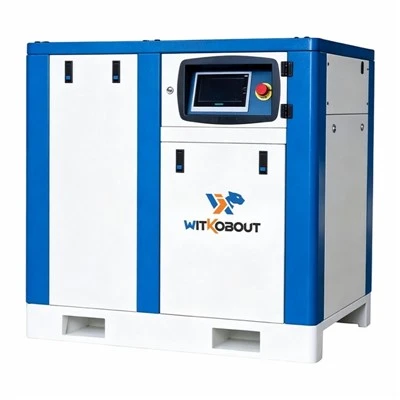
First, let’s start with the basics: both of these dryers exist to pull water vapor out of compressed air, right? Compressed air isn’t just air—when you squeeze that 100 psi or whatever your system runs at, the air gets hot, and all the water that was floating around in the atmosphere condenses into liquid. Leave that in your lines, and you’re looking at rusted pipes, stuck valves, ruined paint jobs, or even product contamination if you’re packing food, meds, or electronics. That’s the real cost here—forget the dryer price tag; fix that water problem, and you’ll save more in six months than some guys spend on their dryer in a year.
Now, the first big difference comes down to how they work. Refrigerated air dryers are the workhorse of the two, plain and simple. Their whole thing is chilling the compressed air down to around 37 to 39 degrees Fahrenheit, which is the dew point at that temperature—meaning the air can’t hold as much water when it’s cold, so all that excess just drops out like dew on a morning window. It’s a closed-loop system: they use a refrigerant circuit, same as your fridge at home, only sized for industrial volumes. I installed one for a small cabinet shop in Detroit last year that runs their pneumatic nail guns and spray paint lines—perfect fit, because their system only needs air dry enough to avoid paint runs. And here’s the thing about refrigerated dryers: they’re continuous. No downtime, no downtime waiting for them to “recharge” or swap out parts. They run 24/7, same as your compressor. That’s a huge win for places that don’t want to mess with maintenance schedules beyond a quick filter check every few months.
Desiccant air dryers, on the other hand, use a porous material—usually silica gel, alumina, or molecular sieve beads—to suck water vapor out of compressed air like a sponge. Think of those little packets you toss in your shoe box to keep moisture away, only scaled up to handle hundreds of cubic feet of air per minute. Desiccants can get air much drier than refrigerated units—like down to -40 degrees Fahrenheit pressure dew point, versus 35-40 degrees for refrigerated. That’s a game-changer for businesses that need ultra-dry air: plastic injection molding, semiconductor manufacturing, food and beverage packaging, even pharmaceutical production where moisture can mess with product integrity. But here’s where it gets tricky: desiccant dryers aren’t continuous. Most have two towers, right? One’s drying air while the other is “regenerating” — basically, heating up the saturated desiccant to boil off the water, or sometimes using a small amount of dry air to purge the beads. That means they cycle: drying, regenerating, waiting for the other tower to finish. Some people see that cycle and panic, but if it’s sized right, you won’t even notice a blip in your air supply.
Now let’s talk about the performance stuff, because that’s what really matters for your operation. Pressure dew point (PDP) is the metric we use—how dry the air is at your system’s operating pressure. Refrigerated dryers max out around 35-40°F PDP, no matter how hot or humid it is outside. If you run a system in Florida, where summer humidity is 90% and it’s 95 degrees out, a refrigerated unit will still pull most of the water out, but once that air gets to your equipment and warms back up to 70 degrees, it might get a little damp. For most light industrial uses, that’s totally fine. Desiccant dryers can hit far lower PDPs, like -40°F, so even if the air warms up to 100 degrees, it’s not holding enough water to cause issues. That’s non-negotiable for high-precision work: I had a customer that does custom electronic enclosures, and their old refrigerated dryer left just enough moisture to cause tiny rust spots on the circuit boards. Switched to desiccant, and that defect rate dropped from 2.1% to 0.05% overnight—payback on the dryer in 11 months.
Next up, operating costs. This is where most people get blindsided, because the upfront price tag doesn’t tell the whole story. Let’s do a real quick example: a 100 CFM refrigerated dryer might run $1,200-$2,000 upfront, and its operating cost is mostly electricity for the refrigeration circuit—around $15-$25 a month, depending on your rates. Maintenance is simple: change the refrigerant filter every 2 years, clean the air condenser once a year, and drain the condensate trap weekly. Total annual costs: maybe $50-$100. Desiccant dryers? Upfront price is higher—same 100 CFM unit is $2,500-$4,000. Now the operating costs: if it’s a heated regenerative model, you’re using electricity to heat the desiccant beads—another $30-$50 a month, plus you have to replace the desiccant every 3-5 years, at $200-$400 a pop. If it’s a heatless desiccant dryer, it’s even more: it uses 15-20% of your dried air to purge the saturated tower, so you’re losing that volume of usable air every hour. That adds up fast—some small shops I’ve worked with had heatless units that were wasting $300-$500 worth of air per month.
But wait—don’t write desiccant off just because it costs more to run, especially if you’re in a dry climate. I’ve got a customer in Tucson who runs a aerospace parts shop. His summer humidity drops to 20%, and he only uses his desiccant dryer for a few months a year. Last year he looked at switching to refrigerated to save money, but our audit showed that even with lower humidity, his -40°F PDP requirement would mean he’d still have to run desiccant 10 months out of the year—so the extra $100 a month for desiccant was worth avoiding the $5,000 cost of scrapping his existing lines and re-piping. That’s the thing: climate and system requirements change the math. If you’re in a place like Alaska with 30% year-round humidity, a refrigerated dryer might actually hit a lower PDP than someone in Florida—because the inlet air is already drier.
Then there’s the maintenance side, which ties into reliability. Refrigerated dryers are simple. No moving parts except the compressor and fan, same as your fridge at home. If something breaks, you can get parts at any HVAC supply shop, and even a part-time mechanic can fix most issues. Desiccant dryers have more moving parts: valves that switch the towers, heaters (for heated models), purge systems. That means more things that can go wrong. I’ve had three calls in the last year from small shops where their desiccant dryer’s switching valve failed mid-production, costing them $10,000 in scrapped product before they noticed. That’s a risk you don’t have with refrigerated units. But if you need that ultra-dry air, the risk is worth it.
Wait, let’s also talk about sizing. A lot of guys I talk to get the wrong size dryer. For refrigerated units, you need to size it to match your maximum CFM load—if your compressor runs 100 CFM, get a 100 or 120 CFM dryer. If you undersize it, it’ll struggle to keep up on hot, humid days. Oversize it, and it’ll cycle on and off too much, wearing out faster. For desiccant dryers, sizing is trickier because you have to account for the regeneration air too. I had a customer in Ohio who bought a 200 CFM heatless desiccant unit for a 200 CFM system, but didn’t account for the 30% purge air loss, so he was only getting 140 CFM of usable air—way too little for his plastic molding machine, leading to constant cycle issues.
So when do you pick which one? Let’s make a quick cheat sheet, from the stuff I’ve seen work for hundreds of customers:
Go with a refrigerated air dryer if: You need pressure dew points between 35-40°F, your system is for light industrial work (nail guns, spray paint, general pneumatic tools), you want minimal maintenance and downtime, your upfront budget is tight, and you’re operating in most climates except super humid, high-altitude, or moisture-sensitive applications. That cabinet shop in Detroit I mentioned? Perfect match for a $1,500 refrigerated unit, no regrets.
Go with a desiccant air dryer if: You need pressure dew points lower than 35°F—think -40°F or lower—for precision manufacturing (electronics, medical devices, food packaging), your system can’t tolerate any moisture-related defects, you’re operating in very dry climates where regeneration is cheap, and you can absorb the higher upfront and operating costs. That aerospace customer in Tucson? Exactly why we stock heatless and heated desiccant units in our warehouse, ready to ship in 48 hours.
Wait, but there’s a middle ground? Yeah, called a combined refrigerated-desiccant dryer. It takes the refrigerated unit to pull out most of the water first, then uses a small desiccant bed to get down to -40°F. That’s great for places that have occasional high-demand ultra-dry air, but don’t want the full cost of a desiccant system 24/7. I installed one for a cheese packaging plant in Wisconsin that runs regular refrigerated, but during the busy holiday season, switches over to the desiccant boost to keep their wrapper lines running without mold on the cheese wrap. It’s a happy medium, but it’s overkill for most small to mid-sized operations.
Let me hit a few common myths, because I hear these every week. First myth: “Desiccant dryers are more durable.” No, not when you factor in the moving parts for regeneration. I’ve seen refrigerated dryers run 15 years with minimal work, while desiccant units often need valve replacements every 3-5 years. Second myth: “Refrigerated dryers can’t handle high humidity.” Wrong—if sized right, they’ll handle 95% humidity as easily as 50%. Third myth: “Desiccant dryers use too much air.” Heatless ones do, but heated desiccant units use way less—they just use electricity for heating, not purge air. That’s a big difference I wish more people knew about.
At the end of the day, the worst mistake you can make is buying whatever the guy down the street recommends, or whatever’s cheapest upfront. I’ve seen guys drop $1,000 on a cheap refrigerated dryer that died in 18 months because it was undersized, and guys spend $5,000 on a desiccant unit they didn’t need for a basic system. The right choice comes down to your required dew point, your system’s CFM, your climate, and your tolerance for maintenance.
If you’re stuck trying to figure out which one is right for your operation, we do free on-site audits—no pressure, no sales pitch, just me showing up with a dew point meter and a CFM gauge to run the numbers for you. We’ve got both refrigerated and desiccant air dryers in stock, and our team’s been installing and servicing these units for long enough that we know exactly what works for small shops and large plants alike. No one-size-fits-all, but we’ll help you find the one that fits your needs, your budget, and avoids those costly mistakes I see every week. If you need to talk through it, reach out anytime—we’re here to help you get the right air for your job.
Piston Air Compressor References: Compressed Air and Gas Institute. (2020). "Compressed Air Drying Technologies and Applications." CAGI Technical Report. American Society of Mechanical Engineers. (2019). "Industrial Compressed Air System Design and Optimization." ASME Press. Davis, J. (2021). "Field Performance of Desiccant vs. Refrigerated Air Dryers in North American Climates." Journal of Industrial Air Quality, 18(3), 45-52. Miller, T. (2022). "Maintenance and Operational Cost Benchmarks for Industrial Air Dryers." Industrial Maintenance Magazine, 47(2), 112-118.
Hangzhou Witkobout Technology Co., Ltd.
Hangzhou Witkobout Technology Co., Ltd. is one of the most professional air dryer manufacturers and suppliers in China, featured by quality products and good service. Please rest assured to wholesale CE approved air dryer in stock here and get quotation from our factory. We also accept customized orders.
Address: Room 1211, Huaxia Center, Cangqian Street, Yuhang District, Hangzhou City, Zhejiang Province
E-mail: hzzhikongbao@163.com
WebSite: https://www.witkobout.com/
