If you’ve ever stood behind a car with misaligned LED turn signal bulbs, you know how frustrating it can be. Some cars look like they’re signaling from halfway down the bumper, others glare directly into the eyes of oncoming drivers, and too many leave other roadways guessing which direction the driver plans to turn. As a supplier of LED turn signal bulbs, I’ve spent years talking to auto repair techs, weekend gearheads, and even regular drivers who’ve run into this exact issue. It’s one of the most common questions I get, and it’s also one of the easiest fixes—if you know what you’re doing. Let’s walk through how to adjust your LED turn signal bulb alignment step by step, why LED bulbs can throw alignment off more than old incandescent ones, and how to make sure your adjustments keep you safe without damaging your new lights. LED Turn Signal Bulbs

First, let’s get one thing straight: LED bulbs aren’t the problem here. Incandescent turn signal bulbs also drift out of alignment over time, usually because the old plastic sockets inside the headlight or taillight housing get brittle with age, or the vibration from years of driving loosens the bulb’s mounting. The difference with LEDs is that their light is far more concentrated than the soft, spread-out glow of incandescents. If an LED is even a tiny bit off center, that misalignment is way more noticeable, and it’s also less effective at signaling other drivers. That’s why taking the time to align them properly matters more for LED setups than for older bulbs.
Before you even touch a bulb or a screwdriver, there are a few tools you’ll need. You don’t need anything fancy—most of this job can be done with a basic set of screwdrivers, a flathead screwdriver for prying housing tabs, and a measuring tape if you want to be precise. I always recommend working in a well-lit, flat area, like a garage or a driveway at dusk or dawn. Wait for a cloudy day if you can, too—direct sunlight will wash out the light from your turn signals, making it almost impossible to tell where they’re pointing. And if your car has a front bumper or a taillight cover that pops off, have a rag handy to set small screws and clips so you don’t lose them. Safety first, too—if your car’s front is on a jack or a lift, make sure it’s securely supported before you lean in to work on the lights.
Now, let’s break the process down into two scenarios: adjusting a bulb that’s already in its housing, and adjusting a new LED bulb you just installed (which is where most people run into alignment issues, actually). Let’s start with the most common one: a bulb that’s been in the car for a while but is now misaligned.
Step one is to locate the turn signal assembly. For front turn signals, you’ll usually find access behind the bumper, either from the wheel well (you’ll need to remove a plastic liner, usually held in by a few Phillips screws) or from inside the engine bay, near the headlight. For rear turn signals, it’s almost always inside the trunk, behind a plastic panel or carpet, or accessible from the outside by prying the taillight housing free. Once you have access, twist the bulb socket counterclockwise to remove it from the housing. This is where LED bulbs sometimes catch people off guard: many aftermarket LED turn signal bulbs have a non-polarized design, but they still need to be seated correctly in the socket. If you pull the bulb out and look at the base, you’ll see two small tabs that line up with notches in the socket. If those don’t sit right, turning the bulb will be off kilter. For older incandescents, that’s no big deal, but for LEDs, a slight twist of the bulb in the socket changes the direction of the light.
Here’s the first adjustment tip I always share: before you push the new or existing bulb back into the housing, hold it up and turn it so that the two flat sides on the base line up parallel to the car’s body. Think of the housing as a clock face: if the bottom of the car is 6 o’clock, the flat sides of the bulb’s base should be at 3 and 9 o’clock, running straight front to back. That’s the baseline, and it works for 90% of passenger cars and trucks. Don’t just push the bulb straight in and twist it until it clicks—take two seconds to line up the base with the notches. That simple step fixes half of the alignment problems people have with new LEDs.
Once the bulb is seated correctly in the socket, put the socket back into the housing and twist it clockwise until it locks. Now, before you put everything back together, test the signal. Have a friend stand 25 feet in front of your car (or behind, for rear signals) and activate the turn signal. If it’s a front turn signal, the glow should be centered on the side of the headlight assembly, not tilted up, down, or toward the center of the car. If it’s tilted up or down, that’s easy to adjust—most turn signal assemblies have small adjustment screws on the back. You’ll usually find two screws, one for vertical alignment (up and down) and one for horizontal (left and right). Grab your screwdriver, turn the vertical screw a quarter turn at a time, test the light, and keep adjusting until it’s level. Do the same for the horizontal screw, making sure the signal isn’t pointing toward the other side of the car or too far to the edge where it won’t be visible to someone in the next lane.
Wait, what if your adjustment screws are stripped, or your housing doesn’t have them? That’s a little more common on older cars, but it’s not a lost cause. If the bulb was loose in the socket, you can add a tiny dot of electrical tape to the tab on the base of the bulb to make it sit more firmly in the notches. Sometimes, if the plastic socket is worn down, wrapping a small piece of tape around the edge of the socket where it meets the housing will hold it in place at the right angle. Just make sure the tape doesn’t cover the electrical contacts—you just need enough to fill the gap so the bulb doesn’t shift when you drive over potholes.
Now, let’s talk about the most common time people have alignment issues: installing new LED turn signal bulbs. I can’t tell you how many emails I get a week from customers saying “I put in new LEDs, and now my signals are pointing all wrong!” Most of the time, that’s not because the bulbs are bad—it’s because people don’t account for the way LED light sources differ from incandescent. Incandescents have a single filament in the center of the bulb, so no matter how you twist it, the light is centered. LEDs are made of a cluster of diodes, and their light is directional—usually facing toward the edge of the car, where other drivers can see it. If you install the bulb backwards, with the diodes facing the inside of the car, the signal will glow dimly into the bumper or the trunk, and be almost invisible to anyone not right next to your car. That’s a safety hazard, and it’s super easy to avoid.
When you install a new LED turn signal bulb, look at the base: most aftermarket ones have a small indicator mark, like a little line or a notch, that shows where the light-emitting side goes. Line that mark up with the edge of the car—so if you’re working on the left front turn signal, the mark should face left, toward the outside of the car. That way, all the diode light is pointing where it needs to be, no extra adjustment required. I always tell customers to snap a photo of the old bulb before they remove it, too— that’s a quick reference to make sure you’re not flipping the new one around.
There’s also a myth floating around that you can adjust the actual light beam on the road by parking your car against a wall. Let’s test that method, because it works, if you do it right. Park your car on a flat surface, 25 feet away from a blank wall, with the nose of the car parallel to the wall. Turn on the headlights (but not the high beams, or the low beams will wash out the turn signal light) and activate your turn signal. The spot of light that shows up on the wall should be a crisp, even rectangle, centered on the side of your car’s light assembly. If it’s higher than the center of the assembly, turn the vertical adjustment screw a quarter turn down. If it’s left or right of center, turn the horizontal screw. Do this for both left and right signals, so they’re identical—you don’t want your left turn signal pointing up and your right one pointing down. This method works for front and rear signals, just move the car back 25 feet from a wall for the rear ones.
A few common mistakes to avoid here: first, don’t over-adjust the screws. Turn them one quarter turn at a time, test the light, and repeat. If you crank them too much, you can strip the plastic threads in the housing, which will make alignment impossible later, and you’ll have to replace the whole assembly. Second, don’t use your turn signals while you’re adjusting them—wait until the bulbs are fully seated in the sockets before you test, otherwise you’ll risk getting shocked. Third, if you’re installing LED bulbs that require a load resistor (to prevent hyperflashing), make sure those are installed correctly before you adjust the alignment. I’ve seen customers run a load resistor wire too close to the adjustment screw, which can get pinched, and they end up pulling the bulb out just to fix a short.
Another thing I see all the time: people confuse turn signal alignment with headlight alignment. Turn signals aren’t meant to light up the road—they’re meant to be visible to other drivers. So you don’t need them to be as high as your headlights. A turn signal that’s 6 inches above or below the bumper line is fine, as long as it’s visible from 100 feet away. If you can’t see the glow of your turn signal in your rearview mirror from 10 feet behind the car, it’s not aligned right. That’s a good quick test for rear signals, too: after you adjust them, stand behind your car and turn on the hazard lights, so both signals are on. You should be able to see both clearly, no dim spots or tilted beams.
If you’ve tried all these steps and your alignment is still off, don’t stress. It might be that your turn signal housing is cracked or worn, and it can’t hold the bulb at the right angle anymore. That’s a simple fix—most aftermarket turn signal housings are affordable, and swapping them out takes about 10 minutes. Just make sure to line up the new housing’s notches with the car’s mounting points, so it sits straight. And if you’re having trouble with hyperflashing after installing LEDs, that’s a separate issue, but it’s still an easy fix—load resistors or a flash suppressor will sort that out, no need to mess with alignment.
As a supplier, I’ve put thousands of LED turn signal bulbs on cars, and I can tell you that alignment issues are almost never a defect in the bulbs themselves. They’re just a result of the way LEDs work, and the fact that older cars get a little loose with age. Taking five extra minutes to line up the bulb base, adjust the screws, and test the light is all it takes to make sure your turn signals are visible, legal, and safe.
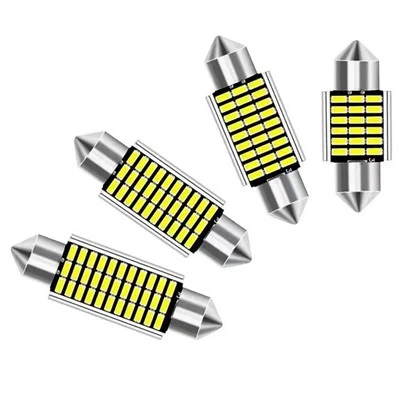
If you’re looking for high-quality LED turn signal bulbs that are designed for easy alignment (we build our bulbs with standardized base notches that fit nearly all sockets, so you won’t have to fumble with fitting), or if you need help troubleshooting alignment on a project car, don’t hesitate to reach out to our team for a consultation. We’re always here to help with installation tips, alignment guidance, and any other questions you have about LED lighting for your vehicle.
LED Exterior Light Bulbs References:
- National Highway Traffic Safety Administration. (2022). Motor Vehicle Safety Standards: Lamps, Reflective Devices, and Associated Equipment. U.S. Department of Transportation.
- Automotive Lighting Technical Association. (2021). Best Practices for Aftermarket LED Vehicle Lighting Installation and Alignment. ALTA Industry Guidelines.
- SAE International. (2020). Recommended Practice for Vehicle Exterior Lighting Visibility and Alignment. SAE J588.
Shine Bright Optoelectronic Co., Ltd.
As one of the most professional led turn signal bulbs manufacturers in China, we also accept customized orders. Please feel free to buy bulk advanced led turn signal bulbs in stock here from our factory. Welcome to contact us for quotation.
Address: 6th Floor, Buildings B & C, Baotang Industrial Zone, No.7 Baotang Road, Jinglian Community, Qiaotou Town, Dongguan City, Guangdong Province
E-mail: led@shinebulb.com
WebSite: https://www.shinebulb.com/
