Hey everyone, if you’ve ever worked with radio frequency (RF) gear—whether it’s setting up a home theater system, debugging a lab test rig, or configuring a broadcast transmitter—you’ve probably stumbled across a panel mount BNC connector at some point. As someone who’s been in the BNC RF connector supply game for years, I get that most folks just see them as that little metal round thing with a twist lock, but there’s way more to them than just “another connector.” Let me break this down like I would to a regular engineer or hobbyist who’s got questions, no stuffy jargon that makes your eyes glaze over. BNC RF Connector
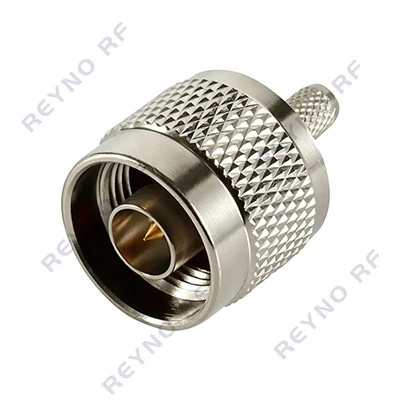
First off, let’s start with the basics: what even is a BNC connector, full stop? BNC stands for Bayonet Neill-Concelman—named after the inventors, Paul Neill and Carl Concelman, two RF folks who were tinkering with quick-connect connectors back in the 1940s. Back then, the big issue with RF connectors was that you had to screw them on tight, which took forever, especially in tight spaces where you’re juggling multiple cables. The bayonet twist-lock design fixed that: you line up the central pin, push it straight in, twist a quarter turn, and you’re done. No tools, just a fast, secure connection that doesn’t wiggle loose. That’s a big deal for any setup where vibration’s a problem—like a truck’s onboard comms or a portable test unit you’re hauling around.
Now, a panel mount BNC is a specific flavor of that BNC connector. Let’s distinguish it from the other types, right? You get cable mount BNCs that clamp directly to a coax cable—those are the ones you plug into the back of your old TV or a oscilloscope. Panel mount is built the opposite: it’s designed to be installed through a flat surface, a “panel,” like the metal chassis of a radio, a lab enclosure, or the back of a network switch. Think of it like a wall outlet, but for RF signals. The way it works is, you cut a hole in the panel, feed the connector from the inside out, then tighten a nut on the back side that locks it flush to the panel. That way, you don’t have a bunch of messy cables sticking out everywhere, and you can plug a cable mount BNC directly into the panel mount without worrying about the whole assembly falling off.
Why does that matter so much? Let’s think about use cases. If you’re building a test bench, every instrument has a bunch of connectors on its front or back panel for hooking up signals. If those were all cable mount, you’d have cables dangling all over, tripping hazards, and constant stress on the cable that can fray the inner conductor over time. Panel mount BNCs eliminate that: the hard, secure mount takes the strain, so the cable just plugs into it without pulling on the delicate connection point. Same with broadcast gear—radio stations have racks and racks of equipment, all with panel mount BNCs on the back for running signal lines between transmitters and antennas. Those lines carry high-frequency RF, so any loose connection would cause signal loss or static, and the panel mount’s solid fit keeps that from happening.
Let’s talk about the engineering side for a sec, because it’s not just a metal chunk—this stuff is precision. BNC connectors are 50 ohms or 75 ohms, right? That impedance matching is key for RF. If you mismatch impedance, you get signal reflection, which is like an echo in your audio but for RF—it kills your signal strength, can cause distortion, or even make a whole setup not work. Panel mount BNCs come in both impedance types, so you have to get the right one for your gear. Most consumer stuff like old TVs is 75 ohms, while industrial, test, and comms gear is usually 50 ohms. We stock both, obviously, because we’ve seen way too many folks grab the wrong one and waste hours troubleshooting a “faulty cable” that was just a bad connector impedance.
Another thing people ask: how do you install a panel mount BNC? It’s not hard, but if you do it wrong, it’ll wobble or not fit tight. First, you need to drill a hole in your panel—most standard BNC panel mounts use a 0.531 inch (13.5 mm) hole, so just measure the spec for your exact connector (some specialty ones are smaller or bigger). Then, you feed the connector through from the front (the side that will be visible, like the front of a test box) and put the washer and locking nut on the back. Tighten the nut with a wrench or pliers, but don’t over-tighten—you can crack the dielectric inside the connector, which is what separates the center pin from the outer shell. That dielectric is usually PTFE or polyethylene, both good for high frequency, and if it cracks, you get signal leakage. Trust me, we’ve had customers send back connectors because they over-tightened during install, so we always tell ’em to go finger-tight plus a quarter turn—no more.
What are the common variations? Let’s see: you have straight panel mount, which is the standard one, where the connector sticks straight out from the panel. Then there’s right-angle panel mount, which is perfect if your panel is tight against another piece of gear and a straight connector would not have room. Those are super popular for compact racks where space is at a premium. We also have bulkhead panel mount, which is a bit different—it has a male pin on one side and a female socket on the other, so you can connect two cables through a panel without needing adapters. That’s a lifesaver for setups where you can’t run a cable all the way through, like a wall between two rooms for antenna signals.
Wait, adapters—speaking of which, a lot of people mix up panel mount with adapters, but no. A panel mount is the actual connector that’s attached to the panel, while an adapter might turn a panel mount male into a cable mount female, or whatever. But that’s a whole separate thing, and we stock those too, but the main event here is the panel mount itself.
Let’s get into why our customers rely on our panel mount BNCs specifically. We’re not just selling a metal part—we test every batch to make sure the impedance is within spec, the bayonet lock clicks securely (not too loose, not too stiff), and the inner conductor is solid enough to handle thousands of insertions. A lot of cheap knockoff BNCs use thin metal for the outer shell, which bends easily when you plug/unplug cables, and over time the bayonet lock wears out, leading to intermittent signal loss. We use gold-plated contacts on all our panel mount BNCs, too—gold doesn’t corrode, which is huge for outdoor setups or environments with humidity. If you’re mounting a panel BNC on an antenna outside, a corroded contact would kill your signal in a few months, but gold plating keeps that connection clean for years.
Common use cases, let’s list a few to make it real:
- Lab oscilloscopes and signal generators: Every test bench has a ton of these, because you need to hook up different signals quickly without tools.
- Broadcast and pro audio: Radio stations, live sound rigs, they use panel mount BNCs for SDI (serial digital interface) signals too—wait, yeah, a lot of video gear uses BNCs now too, not just RF. That’s a good point, BNCs aren’t just for radio anymore.
- Aerospace and defense: On planes, drones, military radios—these connectors have to withstand extreme temperatures, vibration, and moisture, so we make specialized mil-spec panel mount BNCs for that, which are tested to military standards.
- Home networking and CCTV: A lot of CCTV systems use 75 ohm panel mount BNCs for connecting cameras to DVRs, because they’re cheap, durable, and easy to install.
I know what you’re thinking—why not just use RCA connectors, which you see on TVs? RCA is fine for low-frequency stuff, but once you get above like 1 GHz, RCA starts to have signal loss and reflection issues. BNCs are designed for high frequency, up to 4 GHz or more, depending on the model. That’s why RF engineers swear by ’em—you can’t beat the performance for that price point.
Another thing people don’t realize: panel mount BNCs are gendered. There’s male (center pin sticking out) and female (center socket) versions, just like regular BNCs. You can’t plug a male panel mount into another male panel mount without an adapter, same as cables. That’s a simple mistake that trips up new folks all the time, so it’s always good to double-check the gender before ordering.
Let’s touch on maintenance, just in case you’re already using these. If you see dust or grime in the connector, don’t use a wire brush or anything hard— that can scratch the gold plating and cause corrosion. Use a small, soft brush or compressed air to blow out debris, and if the contacts are a little dull, a quick wipe with a cotton swab dipped in isopropyl alcohol works. Never use water, because that can get trapped inside and cause rust over time. If the bayonet lock feels loose, sometimes you can tighten the small set screw on the side of the connector—just be careful not to over-tighten, or you’ll break it.
Now, if you’re here because you need panel mount BNCs for your next project—whether that’s a DIY home lab, a commercial broadcast build, or mil-spec aerospace gear—we’ve got you covered. We stock all the standard types: straight, right-angle, bulkhead, 50 ohm, 75 ohm, gold-plated, nickel-plated, even waterproof versions for outdoor use. Our team knows RF connectors inside and out, so if you’re not sure which one you need—maybe you’re working with a specific coax cable, or your panel has a weird thickness, or you need a custom color for a project—just reach out. We can help you pick the right part, and we offer bulk pricing for large orders, too.
Wait, let’s make sure I didn’t miss anything. Oh, right—common myths. Some people think all BNCs are the same, but nope. The difference between a $1 BNC and a $5 BNC is the materials and manufacturing. Cheap ones use brass instead of gold-plated copper, thin outer shells that bend, and loose tolerances that mess with impedance. That’s why signal loss happens, even if you think you’re using the same connector. We test every batch, so you don’t have to worry about that. Another myth: panel mount BNCs are only for permanent installs. No, they’re designed to be plugged and unplugged hundreds of times, so they’re perfect for test benches where you’re swapping cables all day.
So, to wrap this up: a panel mount BNC is a rugged, high-frequency RF connector designed to mount through a panel, offering a fast twist-lock connection, solid signal integrity, and durability for everything from home labs to aerospace gear. It’s not just a “random metal connector” — it’s a key part of any setup that relies on reliable high-frequency signal transfer.
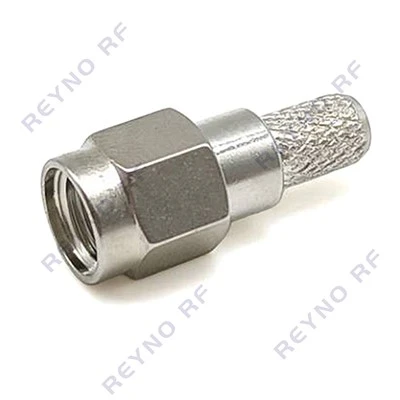
If you’re ready to get your hands on quality panel mount BNC connectors, or you have questions about which type fits your project, don’t hesitate to connect with us. We’re here to help, no matter if you need 10 connectors for a small DIY build or 10,000 for a full-scale production run.
BNC RF Connector References
- Microwave Engineering, Pozar, D.M.
- RF Connector Technology, Presser, A.
- Telcordia GR-326-CORE, Generic Requirements for Coaxial Connectors
- Military Specification MIL-C-39012, Connectors, Radio Frequency, Coaxial, Bayonet Coupling
- BNC Connector Design and Application Guide, Amphenol RF Division.
Zhenjiang Leiluo Electronic Co., Ltd.
Zhenjiang Leiluo Electronic Co., Ltd. is one of the most professional bnc rf connector manufacturers and suppliers in China. We have world-leading production equipment and strong manufacturing capabilities. Please feel free to buy advanced bnc rf connector for sale here and get quotation from our factory. Customized orders are welcome.
Address: No.21 Houxiang Industrial Road, Danbei Town, Danyang City, Jiangsu Province
E-mail: wenvy@rfleiluo.com
WebSite: https://www.rfreyno.com/
