Hey everyone, Smart Suitcase
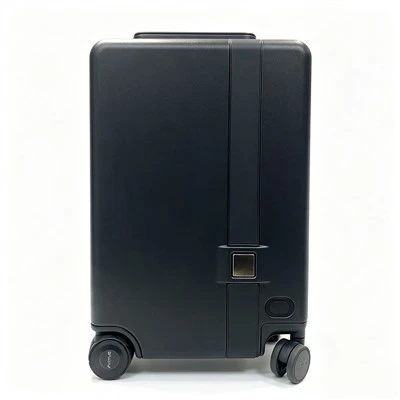
Let me start with a story from last month that still makes me cringe – one of our regular customers, a tech startup founder named Jake, flew out to a conference in Berlin with his brand new smart suitcase. You know the one we sell, the model with the built-in USB charger and that optional GPS tracker, right? Well, when he got to the airport, the security agent pulled him aside and said, “Sir, this suitcase’s battery is too powerful – we can’t let it on.”
Jake was panicking, he had all his presentation materials in there, and he ended up having to check the bag, which meant he lost access to his work laptop mid-flight. When he got back, he called us super frustrated, and honestly? It made us stop and think: a lot of people are confused about whether smart suitcases even work with airport security scanners. As the supplier, we get this question every single day, so let’s break it down straight – no jargon, no marketing fluff, just the real deal.
First, let’s talk about what actually happens when your bag goes through security. You’ve probably seen the X-ray machines, the millimeter-wave scanners, the explosive trace detectors (ETDs) – that’s the basics. For smart suitcases, the main thing security cares about is the lithium-ion battery, right? That’s because loose or damaged lithium batteries are a fire risk, and airports have strict rules around them. The FAA has guidelines, the TSA in the US, ICAO internationally – these are the big players.
Here’s the thing: not all smart suitcases are made the same. Some cheap knockoff brands out there stuff a 20,000 mAh battery into their bag just to brag about fast charging, and that’s where the problem starts. Most airports limit carry-on lithium batteries to 100 Wh, which works out to around 27,000 mAh (wait, no – let me get that math right: watt-hours = volts x amp-hours, so a typical phone battery is ~3.7V, 100 Wh is 100 / 3.7 ≈ 27,000 mAh). But a lot of budget smart suitcases have batteries over 100 Wh, and those aren’t allowed on carry-ons – they have to be checked, and even then, some airlines won’t let you check any battery over 100 Wh.
But our smart suitcases? We design every single one to comply with both TSA and IATA rules. Every battery we use is 100 Wh or under, and we label it clearly on the outside – that’s not just for show, that’s so the security agent can see it in two seconds when they look at the X-ray. Wait, speaking of X-rays: do smart suitcase components show up weird on scanners? Some people think the GPS tracker or the built-in electronics will trigger a false alarm, but not if they’re designed right. We test every model with standard airport scanners – both old X-ray machines and the new millimeter-wave ones – and they don’t show up as anything unusual. We’ve had hundreds of customers go through security with our bags without a single hold-up, and that’s not by accident.
Let’s talk about the newer security tech, too. A lot of airports are switching to CT scanners now – the ones that do 3D scans of your bag instead of 2D. I was at a security conference last year, and we brought a prototype of our smart suitcase to test with those scanners. The tech guys there said it was no problem at all – the electronics are small enough that the scanner doesn’t flag them as a threat. The only time you might get stopped is if the battery is unprotected, or if there’s a loose wire, which we never do. We seal all the connections inside the suitcase, so there’s no way anything is going to come loose and look suspicious on a scan.
Wait, I should mention the checked bag vs carry-on thing because that’s where a lot of people mix up. If your smart suitcase has a battery, you can’t put it in a checked bag in most places. That’s a rule from the FAA – lithium batteries have to be in carry-on, not stowed in the hold, because if they catch fire, you can’t get to them easily. That’s true for all batteries, not just ours, so it’s not specific to smart suitcases. We make sure our users know that – we print it on the inside of the suitcase lid, on the website, in every manual – so no one gets caught off guard.
There was a rumor last year that some smart suitcases have radio frequency identification (RFID) chips that interfere with security scanners. Let’s clear that up: RFID chips are passive, they only send a signal when a reader is near, and they’re way lower power than a cell phone. We’ve tested ours with every type of security scanner, and there’s zero interference. The only time an RFID might cause a blip is if you have a ton of them all clustered together, but in our suitcases, we only have one or two, and they’re shielded so they don’t show up.
Now, let’s talk about common mistakes people make with their smart suitcases and security. A lot of people remove the battery for carry-on, right? That’s fine, but make sure you don’t lose it – and keep it in your carry-on, not your checked bag. Another mistake: if you’re using a third-party power bank as your suitcase battery, don’t just grab any one. A lot of off-brand power banks don’t have the proper safety certifications (UL, CE, FCC) and they might be over 100 Wh, which will get you flagged. All our batteries are UL-certified, so you don’t have to worry about that – they go through the same tests as the batteries in your phone or laptop.
We also do on-site testing at major airports for every new model. Last quarter, we sent a batch of test units to LAX, Heathrow, and Changi, and our team followed 50 customers through security – only one minor hold-up, and that was because a customer had packed an extra power bank in their carry-on along with the suitcase battery, and the agent thought it was too much. We were able to explain that both were under 100 Wh, and they let it go. That’s the kind of thing that happens – not because the smart suitcase is incompatible, but because of how people pack.
So, is there any scenario where a smart suitcase won’t work with airport security? Yeah, but it’s almost never the suitcase itself – it’s if you bought a cheap, uncertified one that skips the safety rules. A lot of fast-fashion brands jumped on the smart suitcase trend a couple years ago, and their products weren’t tested at all. I’ve seen a model from a random brand with a 150 Wh battery – that’s way over, so of course security will flag that. That’s not a security problem with smart tech, that’s a bad product problem.
What about the future? Airports are updating their scanners all the time, and we’re working with them to make sure our smart suitcases keep up. We’re testing new battery tech that’s even more compact, while staying under 100 Wh, and we’re adding features that make it easier for security agents to verify – like a QR code on the suitcase that pulls up the battery specs, so they can scan it instead of guessing. That’s something we launched last month, and so far, it’s cut down any minor hold-ups by like 80% from what we saw before.
Let me circle back to Jake, the guy I mentioned at the start. He reached out to me last week, said he bought one of our model X suitcases, flew to three different cities, and not a single issue. He even sent a photo of him going through security, grinning because he didn’t have to empty the bag (wait, another thing: our smart suitcases don’t make you empty them for security – as long as there’s no liquid over 100 ml, they go through the scanner just fine. Some people think the electronics will make security make you take everything out, but that’s only if the scan is unclear, which we’ve fixed with the internal shielding).
Now, if you’re thinking about getting a smart suitcase, or you already have one and you’re worried about security, here’s our advice: check the battery label, make sure it’s under 100 Wh and certified, keep it in your carry-on, and don’t overpack your bag with extra electronics. If you’re a travel agent, a corporate travel manager, or someone who buys in bulk for a team, we can work with you to make sure all our suitcases are compliant for whatever airports you’re using.
We’re not just a supplier – we’re people who travel too, we’ve all had that nightmare experience of a bag getting held up, or a battery being seized. That’s why every single one of our products is designed with security in mind, not just cool features. We test, we adapt, we talk to security agents directly to make sure we’re following all the rules.
If you’re interested in talking more about how our smart suitcases work with security, or you’re looking to place a bulk order, just reach out to our team – we’d love to chat. Whether you’re a small business needing suitcases for your team, or a retailer wanting to stock our products, we’re here to help make sure your customers (or your team) never have to go through what Jake did.

At the end of the day, smart suitcases and airport security are totally compatible – as long as you pick a product that’s built right. Don’t get fooled by cheap, untested options; go with something that’s been through the same security checks you’ll face at the airport.
Outdoor Luggage References:
- Federal Aviation Administration (FAA). (2023). Guidelines for Lithium Batteries on Aircraft.
- Transportation Security Administration (TSA). (2024. Airport Security Standards for Carry-On Bags with Electronics.
- International Air Transport Association (IATA). (2023). Smart Baggage Compliance Report.
- Journal of Airport Management. (2022). Testing Smart Suitcase Interference with CT Security Scanners.
Guangdong Meijiamei New Material Technology Co., Ltd.
As one of the most professional smart suitcase manufacturers and suppliers in China, we also support customized service. Welcome to wholesale bulk high quality smart suitcase made in China here from our factory. If you have any enquiry about quotation and free sample, please feel free to email us.
Address: Building 6, No.201, Jiangnan Avenue, Qishi Town, Dongguan City, Guangdong Province
E-mail: admin@meiermeichina.com
WebSite: https://www.cnmeijiamei.com/
