Hey everyone, it’s [Your First Name] from the metal hose team – quick question for anyone who’s worked on outdoor projects: have you ever stood there stressing about hoses cracking, corroding, or failing mid-install just because it’s outside? I get it, outdoor environments are brutal – UV rays, extreme temps, rain, even salt if you’re near the coast. A lot of folks hit me up asking if our metal hoses can even hold their own out there, so let’s break this down straight, no jargon, just real talk. Metal Hose
First off, let’s cut to the chase: yes, metal hoses absolutely work in outdoor environments – but not all metal hoses are created equal. I’ve seen way too many installers grab a random metal hose from a supply shelf, toss it outside, and then panic when it rusts or leaks a month later. The difference comes down to what they’re made of, how they’re built, and how you set ’em up. Let’s start with the materials, because that’s the non-negotiable.
For most outdoor uses, stainless steel is the go-to – but even within stainless, there are grades that matter. 304 stainless steel is the standard for general outdoor stuff, like water lines for patios, irrigation, or small commercial projects. It resists corrosion from regular rain, mild temperature swings, and even the occasional splash of fertilizer or pool chemicals. But if you’re working near the ocean, industrial areas, or places that get lots of road salt (think northern states in winter), 304 might not cut it. That’s when you step up to 316 stainless – it has molybdenum added, which makes it way better at fighting chloride corrosion, the stuff that eats through metal super fast near coasts or where salt is used. I had a customer last year who installed 304 hoses for a coastal dock project, and within three months, they were pitted. Switched to 316, and they’re still running strong two years later. That’s the kind of mistake we help people avoid.
Wait, what about other metals? Like aluminum or galvanized steel? I’d steer clear of those for outdoor use, most of the time. Aluminum is light, but it bends too easily and corrodes faster than stainless in wet environments. Galvanized steel has that zinc coating, but it flakes off over time from UV exposure and temperature changes, leaving the steel underneath to rust. I’ve had a few DIYers reach out asking about cheap galvanized hoses for their backyard sprinkler – I always tell ’em it’ll save you money upfront, but you’ll be replacing it in a year. Not worth the hassle.
Next, how the hose is constructed. Most metal hoses are corrugated, right? The corrugations aren’t just for flexibility – they actually help with durability outdoors. The smooth, uniform corrugations shed water better than, say, a welded metal pipe, so there’s less standing water that can cause corrosion. Some of our hoses also have an outer braid – that’s a woven metal layer over the corrugated core. The braid adds extra strength, which matters when you’re dealing with wind that can sway hoses, or heavy snow pushing down on them. It also acts as a barrier against UV rays, which is a big one. Plastic hoses get brittle in the sun, but metal is UV-resistant – but wait, if you leave the inner corrugated layer exposed, direct sun can break down any protective coatings if they’re thin. The outer braid covers that up, so that’s a key feature to look for.
Now, let’s talk about the environments that are extra tough. We’re not just talking backyards here – outdoor industrial uses, like process lines at factories, HVAC exhaust lines, or fuel lines for outdoor generators, have way harsher conditions. For those, we offer hoses with a PTFE inner liner sometimes, but even then, the outer layers are metal to handle the UV, temperature extremes, and chemical exposure. I recently worked with a facility that needed hoses for their outdoor steam lines – temps swing from -20°F in winter to 90°F in summer, and they had issues with rubber hoses cracking within months. Our stainless steel hoses with proper insulation for temperature control fixed that, and they haven’t had a leak in over a year. That’s the kind of performance you can’t get with plastic or rubber alternatives.
But here’s the thing: metal hoses aren’t invincible outdoors – you still gotta do some setup right to make ’em last. A common mistake is leaving them fully extended without any slack, especially in places where temps change a lot. Metal expands and contracts – when it’s hot, it gets longer; cold, it shrinks. If a hose’s tight between two fittings, that can pull on the connections or even crack the corrugations over time. We always tell customers to leave 5-10% extra length when installing outdoor metal hoses, to account for thermal expansion. Also, support the hose every 3-4 feet along its run – don’t let it hang loosely, especially in windy areas. That swaying can wear on the braid or fittings over time.
Another big one: fittings. The end connections (where the hose attaches to pipes or equipment) need to be rated for outdoor use too. We use 316 stainless fittings for coastal or salt-heavy areas, and brass fittings for lighter outdoor uses, but brass does tarnish – so if you want a more polished look for a patio or outdoor kitchen, we offer coated brass fittings that resist tarnishing. Never use a fitting that’s meant for indoor use outdoors – they’re not sealed against moisture, so leaks happen.
Wait, let’s address a question I get all the time: is metal hose more expensive upfront than plastic or rubber? Yeah, it is – but let’s do the math. A rubber hose for an outdoor sprinkler might cost $20, but it’ll last 1-2 years. A stainless steel metal hose for the same job is $80, but it lasts 10+ years. So over time, it’s way cheaper. I’ve had customers come back after their first year of using our hoses, saying they saved hundreds in replacement costs and downtime from leaks. For commercial projects, that downtime is way more expensive than the hose itself – if a food processing plant’s outdoor line fails, that’s hours of lost production. Our hoses eliminate that risk.
Let’s also cover some real-world applications people might not think about. Outdoor fire suppression systems – metal hoses here are critical because they need to be reliable in extreme heat, and they don’t burn like rubber. Outdoor solar panel cooling lines – metal hoses can handle the high temps from the sun and the water used for cooling. Even outdoor RV hookups, if you want something that won’t kink or crack when you’re hauling it around. I’ve had RV owners use our flexible metal hoses for their water lines, and they say it’s way better than the flimsy plastic ones that split at campgrounds.
Now, what about common myths? I’ve heard “metal hoses are heavy and hard to install” – sure, some thick ones are, but we make lightweight options for smaller jobs, like our 304 stainless corrugated hoses for patio use. They’re just as easy to bend as a good quality rubber hose, but way more durable. Another myth: “all metal hoses are the same” – nope, as I said earlier, the grade of stainless, the braid thickness, and the liner all change the performance. Cheap metal hoses from big box stores often use lower grade stainless or thin braid, which fail fast. We test every batch of our hoses for pressure, corrosion resistance, and flexibility, so you know they’re built to last.
So when you should go with metal hose for outdoor use? Let’s list it out: if you need durability in extreme temps, salt exposure, UV rays, or chemicals; if downtime or replacement costs matter; if you want a hose that’s flexible but won’t kink or leak. When maybe you don’t? If it’s a super temporary job, like a backyard party that only needs a hose for a week – then a cheap rubber one works. But for anything long-term, metal is the way to go.
At the end of the day, the biggest mistake I see is not asking the right questions when choosing a metal hose for outdoor. Like, “am I near salt water?” – that’s a key detail. “What’s the temperature range here?” – another big one. We don’t just sell hoses, we help people pick the right one for their specific outdoor environment. If you’re working on a project – whether it’s a small residential patio, a commercial industrial setup, or anything in between – and you’re not sure which metal hose fits your needs, hit us up. We’re here to walk you through materials, construction, and the best setup to make your hose last. No pressure, no weird sales tactics, just honest advice from a team that knows metal hoses inside and out.
References: 1. Stainless Steel Pipe and Tube Institute. (2022). Corrosion Resistance of Stainless Steels in Outdoor Environments. 2. American Society of Mechanical Engineers. (2021). Design Guidelines for Flexible Metal Hoses for Outdoor Applications. 3. International Code Council. (2020). Outdoor Plumbing and Mechanical System Installation Standards.Hey everyone, it’s Sam from the metal hose team – quick question for anyone who’s dealt with outdoor projects: have you ever spent hours installing a hose, only for it to crack, rust, or leak a month later because it was stuck outside? I get it, outdoor spaces are brutal – UV rays bake materials, extreme temps warp them, rain and moisture eat away at metal, and salt if you’re near the coast? Total corrosion nightmare. A ton of folks hit me up asking if our metal hoses can even hold up out there, so let’s cut the fluff, no fancy jargon, just real talk.
First off, let’s make it clear: yes, metal hoses absolutely work in outdoor environments – but not all metal hoses are created equal. I’ve seen way too many installers grab a random metal hose off a supply shelf, toss it outside, and then panic when it pits or leaks within weeks. The difference boils down to three big things: material grade, construction, and how you set it up.
Let’s start with materials, because that’s the non-negotiable. For most outdoor uses, stainless steel is the standard, but even within stainless, there are grades that matter. 304 stainless steel is the go-to for general outdoor stuff: patio water lines, basic irrigation, small commercial hookups. It resists corrosion from regular rain, mild temp swings, and even the occasional splash of fertilizer or pool chemicals. But if you’re working near the ocean, industrial zones, or places that use road salt (hello, northern winters), 304 might not cut it. That’s when you step up to 316 stainless – it has molybdenum added, which makes it way better at fighting chloride corrosion, the sneaky stuff that chews through metal fast near coasts or salt-treated roads. I had a coastal dock client last year who installed 304 hoses on a budget, and within three months, they were pitted so bad they were leaking. Switched to 316, and those hoses are still running strong two years later – that’s the kind of mistake we help people avoid.
Wait, what about other metals? Aluminum or galvanized steel? I’d steer clear 9 times out of 10. Aluminum is light, but it bends too easily and corrodes faster than stainless in wet environments. Galvanized steel has a zinc coating, but that flakes off over time from UV and temp changes, leaving the steel underneath to rust. A DIYer hit me up last month asking about cheap galvanized hoses for his backyard sprinkler – I told him upfront it’ll save $20 now, but he’ll be replacing it in a year. Not worth the hassle of digging up lines.
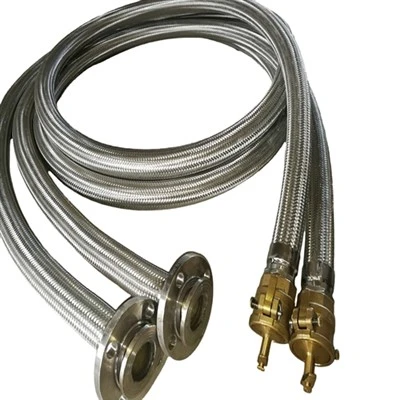
Next, construction matters more than you’d think. Most metal hoses are corrugated, right? Those waves aren’t just for flexibility – they shed water better than a rigid metal pipe, so there’s less standing water that causes corrosion. A lot of our hoses also have an outer braid: a woven metal layer over the corrugated core. That braid adds strength for windy areas or heavy snow loads, and it’s a game-changer for UV protection. Plastic hoses get brittle in the sun, but metal is UV-resistant – but if you leave the inner corrugated layer exposed, direct sun can thin any protective coatings and speed up wear. The outer braid covers that up, so it’s a must for long outdoor life.
Now, let’s talk about the really tough outdoor scenarios we see: industrial lines, HVAC exhaust, fuel for outdoor generators. These have way harsher conditions than a backyard patio. For these, we use hoses with solid stainless cores and heavy-duty braids, sometimes with insulation for extreme temps. I had a food processing plant client last year whose rubber outdoor steam lines were cracking every 3 months – they tried our insulated stainless hoses, and they haven’t had a leak in over a year. That’s the kind of reliability you can’t get with plastic or rubber alternatives.
But here’s the catch: metal hoses aren’t invincible outdoors – you still gotta set ’em up right. A super common mistake is leaving hoses fully extended without slack. Metal expands when it’s hot, shrinks when it’s cold. If a hose is tight between two fittings, that pulls on connections and can crack corrugations over time. We always tell customers to leave 5-10% extra length when installing outdoor hoses to account for thermal movement. Also, support every 3-4 feet – don’t let it hang loosely in windy areas, that swaying wears on the braid and fittings fast.
Another big one: fittings. The end connections (where the hose hooks to pipes or equipment) need to be outdoor-rated too. We use 316 stainless for coastal or salt-heavy areas, and brass for lighter use, but brass tarnishes – so if you want a polished look for an outdoor kitchen, we offer coated brass fittings that resist tarnishing. Never use indoor fittings outdoors – they’re not sealed against moisture, so leaks happen.
Wait, let’s address the “metal hoses are too expensive” question head-on. Yeah, upfront cost is higher than plastic or rubber, but do the math: a rubber sprinkler hose is $20, lasts 1-2 years. Our 304 stainless hose for the same job is $80, lasts 10+ years. Over time, it’s way cheaper. For commercial projects, downtime is even costlier – if a factory’s outdoor line fails, that’s hours of lost production. Our hoses eliminate that risk, so the small extra upfront cost pays for itself fast.
Let’s cover some uses people don’t think about: outdoor fire suppression systems – metal hoses don’t burn or soften in heat, so they’re reliable when you need ’em most. Solar panel cooling lines – they handle sunbaked temps and regular water flushes perfectly. Even RV water hookups – our lightweight metal hoses don’t kink or split at campgrounds like flimsy plastic ones. An RV owner I work with uses our hoses for cross-country trips, and he says he hasn’t had a leak in 3 years, compared to 3-4 splits with his old rubber hoses every season.
Now, the myths I hear all the time: “Metal hoses are heavy and hard to install.” Sure, thick industrial hoses are, but we make lightweight options for small jobs – our 304 corrugated patio hoses bend as easy as a good quality rubber hose, no extra tools needed. Another myth: “All metal hoses are the same.” Nope – cheap big-box metal hoses use low-grade stainless or thin braid that fails fast. We test every batch for pressure, corrosion, and flexibility, so you know they’re built to last, not cut corners.
So when should you go metal for outdoor? If you need durability against salt, UV, extreme temps, or chemicals; if you hate replacing hoses every year; if downtime or replacement costs matter. For super temporary stuff – like a one-time backyard party hose – cheap plastic works, but for anything long-term, metal is the way to go.
At the end of the day, the biggest mistake people make is not asking the right questions when picking a metal hose. “Am I near salt water?” “What’s the lowest and highest temp here?” “What’s this hose going to carry?” Those details change everything. We don’t just sell hoses – we help people pick the right one for their specific outdoor setup, no pushy sales stuff, just honest advice from a team that knows metal hoses inside and out.
If you’re working on a project – residential, commercial, whatever – and you’re not sure which metal hose fits, hit us up. We’re here to walk through options, answer questions, and make sure you get a hose that works as hard as your outdoor project does. No pressure, just real help.
Industrial Components References: 1. Stainless Steel Pipe and Tube Institute. (2022). Corrosion Resistance of Stainless Steels in Outdoor Environments. 2. American Society of Mechanical Engineers. (2021). Design Guidelines for Flexible Metal Hoses for Outdoor Applications. 3. International Code Council. (2020). Outdoor Plumbing and Mechanical System Installation Standards.
Hengshui Minai Rubber & Plastic Technology Co., Ltd.
Hengshui Minai Rubber & Plastic Technology Co., Ltd. is one of the most professional metal hose manufacturers and suppliers in China, featured by quality products and good price. If you’re going to buy advanced metal hose made in China, welcome to get quotation from our factory. Welcome to contact us for customized service and OEM/ODM service.
Address: West of the Town, Jiangheliu Town, Jing County, Hengshui City, Hebei Province
E-mail: mnrubberseal@outlook.com
WebSite: https://www.mnrubberseal.com/
