When a potential client first reaches out to our CNC turning service, they often start with a simple question: “Can you handle the part I’m designing?” Most of the time, that question is tied to a project that doesn’t fit the mold of basic, cylindrical components—something with undercuts, irregular radii, off-center features, or intricate details that traditional machining might struggle to pull off. For years, there’s been a common misconception that CNC turning is only for straightforward, axisymmetric parts, like shafts, bolts, or bushings. But as a CNC turning service provider with over a decade of working with aerospace, medical device, and automotive clients, I’m here to set the record straight: CNC turning absolutely can handle complex geometries—if you have the right tools, expertise, and approach. CNC Turning Service
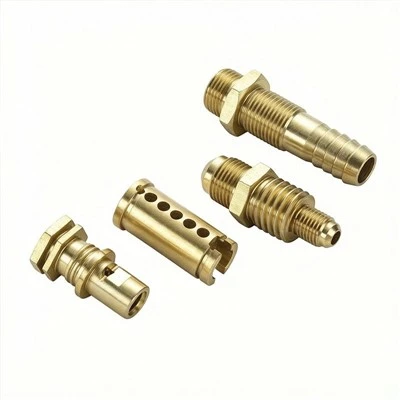
Let’s break this down with the kind of real-world examples we see on our shop floor every week. Last quarter, a medical device startup brought us a prototype for a surgical tool tip. It required a 0.012-inch diameter through-hole that wasn’t centered, three small, angled undercuts spaced 120 degrees apart along the length, and a tapered radius that shifted from 0.08 inches at the base to 0.02 inches at the very end. At first glance, that sounds like a job for milling, right? Milling is usually the go-to for non-axisymmetric features, but in this case, the team’s design relied on a tight tolerance (±0.0005 inches) and a surface finish smooth enough to avoid damaging delicate tissue during use. Milling would have introduced tool marks and required multiple setups that would have introduced alignment errors. Instead, we used a multi-axis CNC lathe—specifically, a machine with a B-axis that can rotate the cutting tool while the part turns, instead of just moving along X and Z axes. That let us machine the angled undercuts without re-chucking the part, eliminating alignment drift. The through-hole was drilled with a solid carbide gun bit held in a live tooling station, which operates independently of the main spindle, so we could position it exactly off-center. By the end of the first run, we delivered the prototype with zero geometry errors, and it went straight to clinical testing. That’s not a “simple” CNC turning job, but it’s exactly what our service is built to handle.
A lot of people new to CNC machining don’t know that modern CNC turning isn’t limited to 2-axis, axisymmetric work. The shift to multi-axis lathes—3-axis, 4-axis, even 5-axis turning centers—has opened up entirely new possibilities for complex geometries. 3-axis turning lets you add live tooling (drills, mills, taps) to the machine, so you can perform secondary operations like creating flat faces, slots, or cross-holes without moving the part. 4-axis turning adds a rotary axis for the sub-spindle, letting you machine one side of the part, flip it in the same chuck, and machine the other side—perfect for parts with symmetric features that need to be aligned perfectly, like the gear hubs we make for electric bike manufacturers. 5-axis turning, which combines turning, milling, and full rotational motion for both the tool and part, is where things get really interesting for ultra-complex shapes. We worked with an aerospace component maker last year on a fuel line fitting that had a series of curved, non-axisymmetric lobes, internal threading at three different angles, and a complex seal face that had to mate perfectly with a mating component. A traditional 2-axis lathe would have required multiple setups, each introducing small errors that would have compromised the seal. With a 5-axis turning center, we could rotate the part and adjust the tool position in real time to machine every feature in a single chucking, holding tolerances tight enough to pass aerospace’s rigorous leak testing standards.
But it’s not just about the machines. The other half of being able to handle complex geometries is the expertise of your programming and setup teams. A bad program can turn a $50,000 multi-axis lathe into a paperweight, or produce a part with hidden flaws that don’t show up until it’s in use. On our team, every part that comes through the shop goes through a DFM (Design for Manufacturing) review first—this is where we catch potential issues before we even hit “run” on the machine. For a part with complex geometry, the DFM review might reveal that a sharp internal radius is too small for a standard cutting tool, or that a deep undercut would require a long-reach tool that could vibrate and ruin the finish. We’ll work with the client right then and there to adjust the design slightly, without compromising the part’s function. For example, a client once designed a custom pump impeller with six curved blades that swept along the length of the shaft—too complex for 2-axis turning, and too time-consuming for 3-axis milling on a prototype scale. Our programmers wrote a custom tool path for a 4-axis lathe, using a round tool that followed the exact curve of the blades, and adjusted the feed rate and spindle speed to avoid chatter. The result was an impeller that was machined in half the time of a milled version, and had a smoother surface that reduced pump noise by 12% in initial testing. That’s the kind of collaboration that makes complex geometries work—not just showing up and pressing a button on a machine.
Of course, there are limits. No CNC turning service can handle every geometry, and it’s important to be honest about what we can and can’t do. For example, a part with an internal cavity that’s not accessible from the ends—like a hollow section with no opening to feed a tool through—isn’t something we can machine on a lathe. That would require a combination of turning and internal milling, but we don’t offer that in our current setup. Also, geometries that require extreme, non-axisymmetric distortion (like the freeform surfaces some art installations use) are better suited for 5-axis milling, not turning. But for the vast majority of complex geometries that engineers and designers come up with—undercuts, off-center features, angled holes, multi-sided parts, intricate radii—CNC turning is often a faster, more precise, and more cost-effective option than other processes.
I’ve seen too many designers write off turning as a “basic” process, because that’s what it was 20 years ago. Back then, turning was mostly for round parts, and complex features required multiple operations across multiple machines, adding time and error. Today, with advanced machine tools, custom programming, and experienced teams, that’s no longer the case. Our shop runs 12 multi-axis CNC turning centers, and about 60% of the jobs we take on in a given month have at least one complex feature that would have been impossible on a 2-axis lathe. We’ve made parts for hearing aids with custom internal channels, for automotive transmission components with helical gear teeth machined right into the shaft, for custom firearms with non-standard barrel profiles—all using CNC turning.
If you’re reading this and wondering whether your next project is a fit, don’t hesitate to reach out. I can’t tell you how many times a client has come to us with a design they thought only a mill could handle, and we’ve found a way to make it work on a lathe, saving them time and money. The key is to share your design, your tolerance requirements, and your timeline—we’ll walk through the DFM review, talk about the best approach, and make sure there are no surprises once production starts.
Don’t let outdated assumptions about CNC turning hold you back. If you’re looking for a reliable CNC turning service that can handle even the most complex geometries, let’s connect. We’ll walk through your project, address any questions, and help you figure out the best way to bring your design to life.
Steel Casting Machining References
- Groover, M. P. (2020). Fundamentals of Modern Manufacturing: Materials, Processes, and Systems (7th ed.). Wiley.
- DeGarmo, E. P., Black, J. T., & Kohser, R. A. (2011). Materials and Processes in Manufacturing (11th ed.). Pearson.
- Byrne, G., & Dornfeld, D. (2010). Advanced Modeling of Metal Cutting. CIRP Annals – Manufacturing Technology, 59(2), 715–734.
- Smith, G. T. (2015). CNC Programming: Principles and Applications (5th ed.). Industrial Press.
- aerospace.org. (2022). Additive vs. Subtractive Manufacturing for Complex Aerospace Components. Aerospace Industries Association.
Ningbo Yirui Machinery Manufacturing Co., Ltd.
As one of the most professional cnc turning products manufacturers and suppliers in China, we’re featured by quality products and good price. Please rest assured to wholesale durable cnc turning products made in China here from our factory. Customized orders are welcome.
Address: No.107, Wanzhong Village, Jishigang Town, Haishu District, Ningbo City
E-mail: James.he@yiruitek.com
WebSite: https://www.yiruime.com/
